




The recent destruction of large swaths of Los Angeles has shocked the nation, as we not only collectively mourn the loss of life and property, but also witness the apocalyptic images of a beautiful natural landscape scarred by the devastation. It is one more reminder of the fragility of human life, where even modern technology cannot ultimately overpower and subdue Mother Nature.
While I continue to grieve for those whose lives have been forever changed by this catastrophe, friends and colleagues among them, the situation has drawn my mind recently also to pneumatology, or the study of the Holy Spirit.
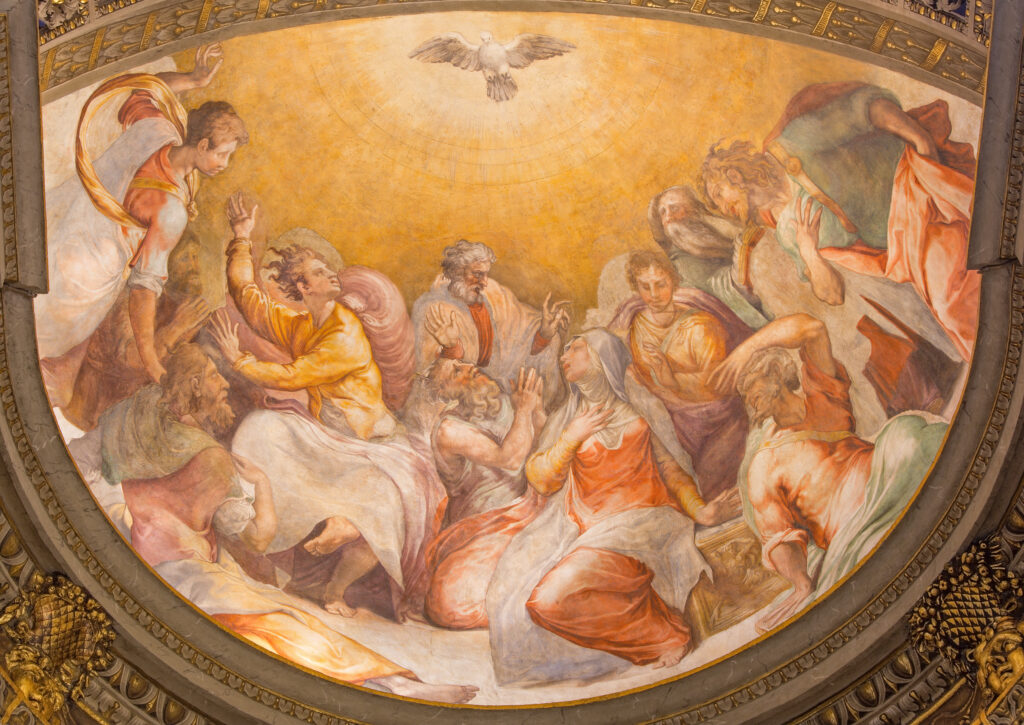
There is a reason that the biblical authors primarily used images of fire and wind, the same forces that were responsible for these astonishing scenes, to describe the Holy Spirit. Not even a fundamentalist would imagine that such metaphors exhausted the depth of divine transcendence that they sought to point toward. But the aspect of God they fumblingly sought to emphasize is clear: the uncontrollable intensity of disruptive power that the incomprehensible God demonstrates at every turn of cosmic history. This explosive energy is also described with images like doves and hens, and comforters and advocates, and sweet anointing from above, making clear once again that every one-sided, clear-cut, black-and-white depiction we have of God and God’s relationship with the created world is inadequate. “If you fully comprehend something, that which you have comprehended is not God,” as Saint Augustine put it.
The Holy Spirit has often been the most misunderstood element of the Trinity, particularly in the Christian West (by which we generally mean the Catholic and Protestant worlds). We of course recognize the Spirit’s presence in the Creed and various liturgical moments, perhaps even giving a passing nod to it/her in our personal prayers. The bulk of the real theological attention, meanwhile, has been dedicated to the Father’s creative power in ordering the cosmos, and on Jesus Christ’s Life, Death and Resurrection – with overwhelming focus often put on that gory middle piece, the Cross, and the considerable influence that reflections on atonement in His blood have stamped into our ecclesial lives. Unfortunately, the sheer tonnage of focus on the tangible presence of Christ has left comparatively little thought on the nature of the Holy Spirit, essentially leaving open the temptation and tendency to domesticate and defang the Spirit.
When we pray for the Holy Spirit to renew the face of the earth (Psalm 104), it seems evident to me that we are not asking for a “controlled burn” to occur so that we can more easily acquire ever greater storehouses and stockpiles of “stuff” in the clearings that remain. If that is secretly the case, then we can be sure that the Last Day will not unfold as we might imagine it. We are, rather, acknowledging both our vulnerability and our culpability for distorting the will of God in the world. We are recognizing that the gift of creation and life itself needs to be revamped, revitalized, and reimagined in the first place. That’s why the “Golden Sequence” in the Pentecost liturgy pines: “Bend what is inflexible, warm what is chilled, correct what has gone astray.”
Interestingly, it can be argued that the paradoxes continue even further, because the Spirit is not only unquenchable fire, but also vivifying water gushing forth across the arid and parched lands of our scorched and blackened hearts. Because whoever believes in Jesus’ salvific mission will in fact have – according to Him who can be trusted – “rivers of living water flowing from within them.” (John 7:38) We cannot understand this in any way apart from the Church’s teaching that the Spirit continues to dwell and roil and unsettle within us – extinguishing as well as inflaming. We drown our sorrows by inundating them in God’s unmerited mercy and solace, at the same time as we ignite our lives over and over again in their passion for His Gospel with the dry kindling of our meager contributions to the effort.
That is why Jesus tells us that his message for reordering our priorities and all that we are, even in a world figuratively and literally set ablaze, is both “spirit and life.” (John 6:63)
An alumnus of Camden Catholic High School, Cherry Hill, Michael M. Canaris, Ph.D., teaches at Loyola University, Chicago.



 at the bottom and then tap “Add to Home Screen”
