



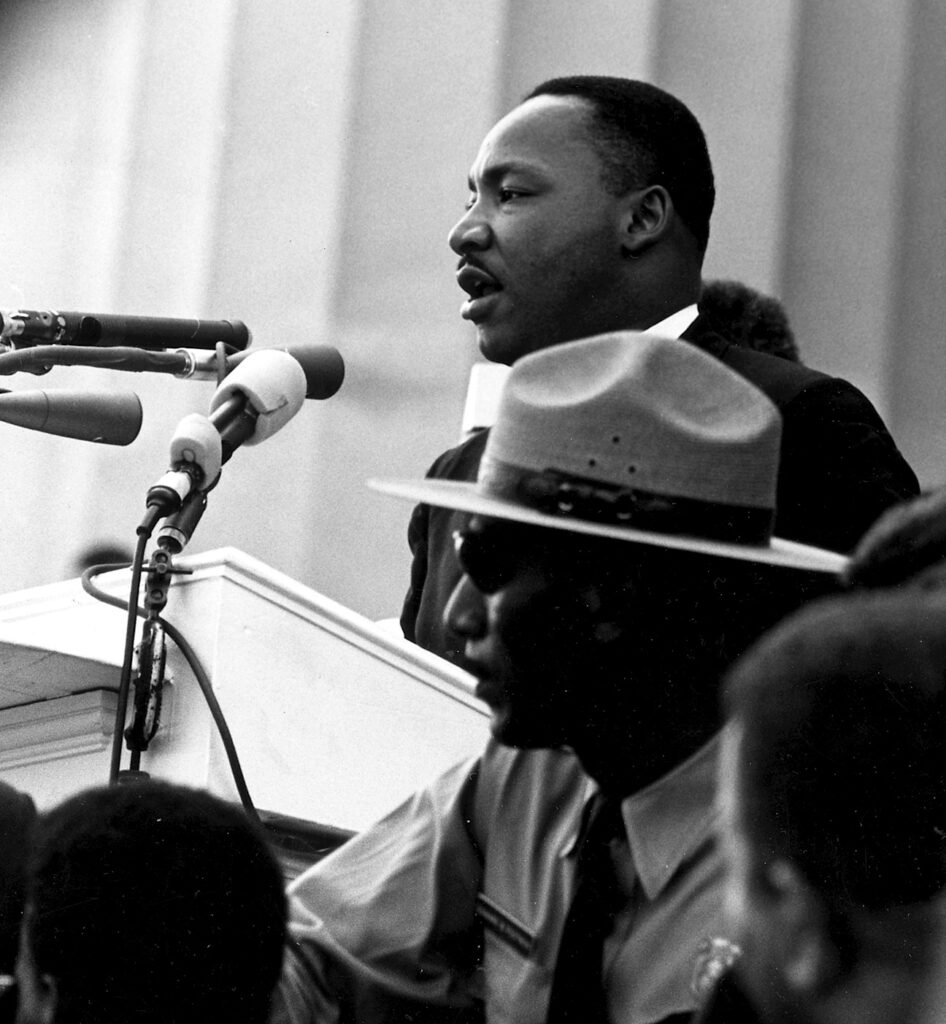
As the country honors the legacy of Dr. Martin Luther King Jr. on Jan. 20, it is important to remember how our recent popes have spoken about the importance of his legacy of nonviolence and racial harmony.
As was reported by Vatican News in a June 2020 article by Alessandro Gisotti, titled “The Pope’s and Martin Luther King’s Dream,” Pope Saint Paul VI received Dr. King at the Vatican on Sept. 18, 1964, and encouraged him to continue his peaceful commitment against racial discrimination. After Dr. King’s assassination, Pope Paul VI mourned his death and called for a “renewed commitment to forgiveness, peace, reconciliation, and that just laws should replace unjust discrimination.”
Another saintly pope, John Paul II, spoke of the “providential role” played by Dr. King “in contributing to the rightful human betterment of Black Americans, and therefore, to the improvement of American society itself.”
In 2008, when Pope Benedict XVI visited Washington, D.C., he met with Dr. King’s daughter, Bernice Albertine, and referenced that her father’s faith in God was the constant inspiration and the driving force of the civil rights movement.
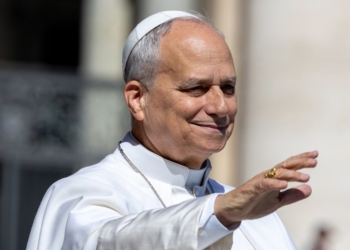
Of recent memory, of course, is Pope Francis, who has spoken about Dr. King several times. I remember watching on television when Pope Francis addressed the U.S. Congress in a joint session. Pope Francis told Congress: “I think of the march which Martin Luther King led from Selma to Montgomery 50 years ago as part of the campaign to fulfill his ‘dream’ of full civil and political rights for African Americans. That dream continues to inspire us all. I am happy that America continues to be, for many, a land of ‘dreams.’ Dreams which lead to action, to participation, to commitment. Dreams which awaken what is deepest and truest in the life of a people.”
This month, the Church entered Jubilee Year 2025, and the theme of the Jubilee is “Pilgrims of Hope.” Again, I think of Dr. King. His life and work were deeply rooted in the theme of hope. His unwavering belief in the potential for positive change, justice and equality propelled the Civil Rights Movement and continues to inspire people around the world.
In his famous “I Have a Dream” speech – delivered Aug. 28, 1963 – Dr. King painted a powerful vision of hope for the future, where people would be judged not by the color of their skin, but by the content of their character. He expressed his dream of a society where racial equality would flourish, and people of all backgrounds could live in harmony and peace. Dr. King’s dream was not just about the present moment, but about a future that could be achieved through persistent effort, faith and hope.
In the papal bull announcing the Jubilee Year, “Spes Non Confundit” (Hope Does Not Disappoint), Pope Francis calls for “signs of hope” in the world today. Pope Francis wrote: “In addition to finding hope in God’s grace, we are also called to discover hope in the signs of the times that the Lord gives us. We need to recognize the immense goodness present in our world, lest we be tempted to think ourselves overwhelmed by evil and violence. The signs of the times, which include the yearning of human hearts in need of God’s saving presence, ought to become signs of hope.” (“Spes Non Confundit” # 7)
A sign of hope in our world today would be an end to the sin of racism that persists in human hearts. A sign of hope would be to see each other as brother and sister, children of God, and members of the Body of Christ called to bring about God’s Kingdom of Love here on earth. We pray that in this Year of Jubilee, the dream of Martin Luther King Jr. can become a reality: “That children will one day live in a nation where they will not be judged by the color of their skin but by the content of their character.” This is hope we both pray for and work toward.
The Irish poet Seamus Heaney wrote that “hope is not optimism, which expects things to turn out well, but something rooted in the conviction that there is good worth working for.” Certainly, the end to racism is a good, and a dream, that is worth the effort.
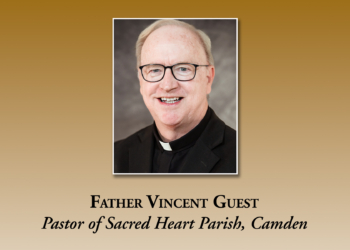
Father Vincent Guest is pastor of Sacred Heart Parish, Camden, and coordinator of the Black Catholic Ministry Commission.




 at the bottom and then tap “Add to Home Screen”
