


Click Here to Subscribe

Photos: Father Naticchione First Mass

Bishop's Schedule

The Bishop’s Schedule, May 26 – June 2

by Staff Reports
May 21, 2026
0
ShareTweet

Featured

The Ascension, like death, not a departure, but a lifting

by Father Michael A. de Leon, AM
16 hours ago
0
ShareTweet

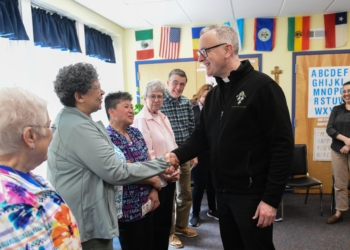
Bishop connects with staff, mission at SSJ Neighborhood Center

by Staff Reports
3 days ago
0
ShareTweet

Faith, Media and the Boardwalk

by Staff Reports
4 days ago
0
ShareTweet
  • Contact
  • Advertise
  • Subscribe
  • Home
Thursday, May 21, 2026
Catholic Star Herald
  • News
    • From Bishop Williams
    • Parish Life
    • Diocesan News
    • Sports
    • Columns
      • From Bishop Sullivan
    • Obituaries
    • World/Nation
  • Catholic Schools
  • Español
  • Features
    • Special Supplements
      • Thank You Bishop Sullivan
      • Welcome Bishop Williams
      • Jubilarians
    • Entertainment
      • Movie Reviews
    • Photo Galleries
    • Talking Catholic
    • Latest Videos
    • Health and Wellness
  • Advertise
  • More
    • Classified
    • Subscribe
    • Contact Us
  • News
    • From Bishop Williams
    • Parish Life
    • Diocesan News
    • Sports
    • Columns
      • From Bishop Sullivan
    • Obituaries
    • World/Nation
  • Catholic Schools
  • Español
  • Features
    • Special Supplements
      • Thank You Bishop Sullivan
      • Welcome Bishop Williams
      • Jubilarians
    • Entertainment
      • Movie Reviews
    • Photo Galleries
    • Talking Catholic
    • Latest Videos
    • Health and Wellness
  • Advertise
  • More
    • Classified
    • Subscribe
    • Contact Us
No Result
View All Result
Catholic Star Herald
No Result
View All Result
Home Columns

‘Interpretive keys’ to the pope’s new document

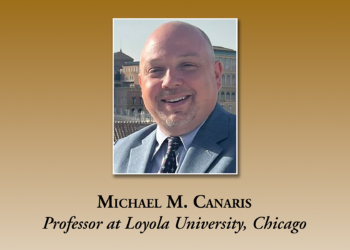
Michael M. Canaris by Michael M. Canaris
September 14, 2017
in Columns, Growing in Faith, Understanding Pope Francis
Reading Time: 4 mins read
0
0
VIEWS
Share on FacebookShare on Twitter

Archbishop Arthur Roche has long been a friend of the Lay Centre, where I lived while studying and teaching in Rome, and where I continue to build relationships for my institutional and diocesan affiliations now. A former bishop of Leeds, where along with Liverpool Loyola has some new ongoing partnerships, the warm and erudite Vatican official graciously agreed to celebrate a Mass for my graduate students last year at the Tomb of Saint Peter beneath the Vatican basilica. They were touched by his homily in that setting.

This past week Archbishop Roche offered some public insights into the pope’s new Motu Proprio, Magnum Principium. I was fascinated to read this genuinely friendly and influential thinker’s “interpretive keys” to understanding Pope Francis’s new document.

The ongoing debate about liturgical translation has proved to be a contentious issue for decades, since the Second Vatican Council allowed the use of vernacular languages in the 1960s to make the mysteries of the Mass more accessible to those who were not fluent in Latin. Since the celebration of the Eucharist is the source and summit of the entire Christian life, the manner in which this regular and profound rite is celebrated has far-reaching implications for believers.

The pope’s recent document altered some norms in canon law (especially §838) regarding the translation of liturgical texts. The most important change is in more clearly defining the roles and mutual dialogues that were envisioned at the council to take place between the Apostolic See (whose thinking is often formally expressed in Rome’s offices within the various curial dicasteries) and the worldwide conferences of bishops moving forward.

Pope Francis apparently felt some clarifications of duties and responsibilities were necessary at this time. Most ecclesiologists have interpreted the text as an affirmation of the importance of the local church in contributing more integrally to the process. Catholicism has long affirmed that lex orandi (the law of prayer) serves as the foundation and determining principle for lex credendi (the law of belief). Put more simply, liturgy leads to theological doctrine, not the other way around.

Archbishop Roche writes:

“The object of the changes is to define better the roles of the Apostolic See and the conferences of bishops in respect to their proper competencies which are different yet remain complementary. They are called to work in a spirit of dialogue regarding the translation of the typical Latin books as well as for any eventual adaptations that could touch on rites and texts. All of this is at the service of the Liturgical Prayer of the People of God…. In the encounter between liturgy and culture the Apostolic See is called to recognoscere, that is, to review and evaluate such adaptations in order to safeguard the substantial unity of the Roman Rite: the references for this material are Sacrosanctum Concilium nn. 39-40; and its application, when indicated in the liturgical books and elsewhere, is regulated by the Instruction Varietates Legitimae. The confirmatio terminology already adopted in the motu proprio Sacram Liturgiam n. IX (25 January 1964) — pertains instead to the translations of liturgical texts which, on the basis of Sacrosanctum Concilium (n.36, §4), are within the competency of the Episcopal Conferences to prepare and approve…The confirmatio of the Apostolic See is therefore not to be considered as an alternative intervention in the process of translation, but rather as an authoritative act by which the competent dicastery ratifies the approval of the bishops.”

All of this means that the local episcopal conferences, for us in America the United States Conference of Catholic Bishops, have a crucial role to play in future decisions of this type. It’s important to note that these documents were promulgated the very week that Pope Francis visits Medellin, Colombia, where the Latin American Conference (CELAM) held a groundbreaking meeting of their own in 1968 that was largely seen as an instrumental moment in the rise of liberation theology and its focus on the intersection between ecclesial life and local contexts of poverty and exclusion. The centrality of concientizacion (sometimes translated as “dynamic awakening”) and eschewing paternalistic and hierarchical forms of education in these documents have echoes in the pope’s recent writings.

Michael M. Canaris, Ph.D., a native of Collingswood, teaches at Loyola University, Chicago.
Previous Post

Welcome back

Next Post

‘Thin’ televisions and our out-of-control consumerism

Related Posts

Columns

Pope Leo positioning the Church for an AI revolution

May 21, 2026
Columns

The Ascension, like death, not a departure, but a lifting

May 21, 2026
Columns

Stuck in a tight spot? Ask Mom, the intercessor

May 18, 2026
Columns

At the hour of any death, trust Our Lady’s promise

May 19, 2026
Facebook Twitter Instagram LinkedIn Youtube RSS

No Result
View All Result

Latest News

New Jerseyans urged to push for nonpublic school security funding

Faithful gather for spiritual renewal ahead of Pentecost

Father Naticchione celebrates first Mass in Ventnor

Bishop Dolan: Presence, connection, education keys to mental wellness

Bishop connects with staff, mission at SSJ Neighborhood Center

Latest Videos

View Ordination of Nickolas B. Naticchione in Cathedral

The legacy of Pope Francis

Pope Leo’s first Easter message

See livestream of Bishop Williams celebrating annual Chrism Mass

Pope Leo XIV’s first Palm Sunday

Around the Diocese

  • The Diocese of Camden
  • Talking Catholic Podcast
  • Catholic Charities
  • Advertise
  • Catholic Cemeteries
  • VITALity Healthcare Services
  • Housing Services
  • Camden Deacon
  • Camden Priest
  • South Jersey Catholic Schools
  • Man Up South Jersey
  • Catholic Business Network

Additional Resources

  • New Jersey Independent Victim Compensation Fund
  • Quick Guide to Reporting Sexual Abuse
  • List of Credibly Accused Priests and Parish Resources
  • Bishop’s Commission Report on Catholic Schools

Reorganization of the Diocese

  • Chapter 11 Claims filing info
  • Chapter 11 Prime Clerk Filing

© All Rights Reserved | May 21, 2026 | Catholic Star Herald of the Diocese of Camden

En español/Sa Tagalog

Add the Catholic Star Herald to your home screen

For Android users(Chrome) tap the at the top right vertical 3 dots then tap “Add to Home Screen”

For iPhone tap:at the bottom and then tap “Add to Home Screen”

  • This field is for validation purposes and should be left unchanged.

If you need assistance with submitting your subscription, please call Neal Cullen at 856-583-6139, or email Neal.Cullen@camdendiocese.org

No Result
View All Result
  • News
    • From Bishop Williams
    • Parish Life
    • Diocesan News
    • Sports
    • Columns
      • From Bishop Sullivan
    • Obituaries
    • World/Nation
  • Catholic Schools
  • Español
  • Features
    • Special Supplements
      • Thank You Bishop Sullivan
      • Welcome Bishop Williams
      • Jubilarians
    • Entertainment
      • Movie Reviews
    • Photo Galleries
    • Talking Catholic
    • Latest Videos
    • Health and Wellness
  • Advertise
  • More
    • Classified
    • Subscribe
    • Contact Us

© All Rights Reserved | May 21, 2026 | Catholic Star Herald of the Diocese of Camden