





Amidst the worldwide social upheavals that indelibly marked the year 1968, particularly among students, a young future historian in Rome organized a small community that strove to take seriously both the call for a more just world brought about through close proximity to the disadvantaged and the perennial demand of the Gospel to deepen one’s interior life through prayer and immersion in the life of the Word.
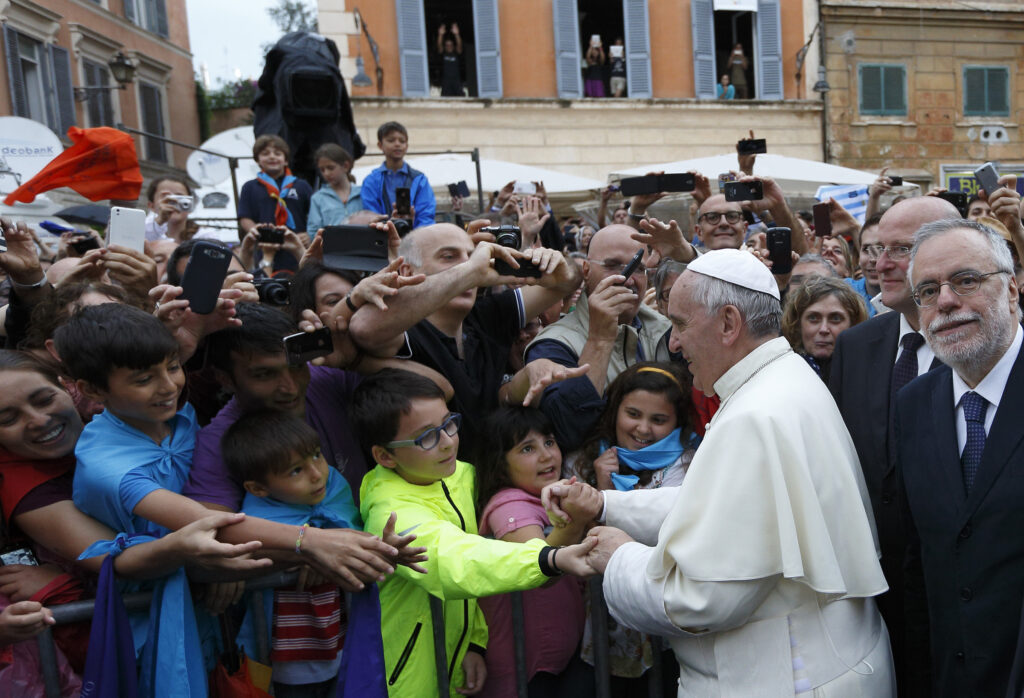
Andrea Riccardi thus founded what would come to be called the Communitá Sant’Egidio. Dedicated by a mixture of happenstance and providence to the patronage of a saint known in English as Giles, or in Spanish as Gil, the community’s spiritual and historical epicenter is in the Trastevere neighborhood, where Jews and Christians once laid down roots at the edges of the dominant Empire’s Aurelian Walls.
Today, the Sant’Egidio community is involved in everything from schools for migrants to pharmacies for the homeless to crusades against capital punishment to care for the elderly, the dis- or differently-abled and the marginalized, to global peacekeeping efforts. They were, for example, central players in brokering a lasting peace among warring factions in Mozambique in the mid-1990s. Virtually all of this is undertaken by tens of thousands of volunteers around the world who hold down every imaginable day (or graveyard shift) job, and then find energy and reward in the ongoing ministries of accompaniment that define the community.
Beyond Riccardi, the most prominent face of the community is undoubtedly Cardinal Matteo Zuppi, the current Archbishop of Bologna. He’s had such a longstanding relationship with them that Pope Francis gave him the titular church of Sant’Egidio when bestowing the honor of service in the College of Cardinals on him. He has since been on every short list of potential eventual successors to the Petrine ministry. (As an aside, I recently watched him laughingly pull a nun trying to kiss his ring up on equal footing with him to offer the final benediction alongside him at Mass, which only made me ponder this speculation all the more assiduously).
Though I do not consider myself an official member – notwithstanding the fact that the process of acceptance into the group is an informal one without vows or ceremonies – I have had friends and colleagues share their profound experiences with the community and welcome me into their orbit for well over a decade. When students come with me to Italy, I always plan a day where we serve in some kind of apostolate or ministry with the group, then eat in their trattoria where the wait staff all have developmental challenges to attest to the universal right of dignified labor, and then attend their splendid, multilingual night prayer, which they have held every evening for more than half a century.
It was in one of these immersive days that a former student of mine, Krysten McOsker, who now holds a graduate degree from Loyola and works in television and communications, felt her heart sparked by the community. Today, she is launching a small branch of Sant’Egidio in Chicago to add to the hundreds of other cities around the world where they are planted and flourishing. Though we usually visit in the summer (Krysten is back in town with me this year), she was particularly taken with discussions of their Christmas celebrations, where tables are brought into the basilica of Santa Maria in Trastevere, and the poor and homeless are served a celebratory lunch by the dignitaries and influential power-brokers in Rome, a true foretaste of the Heavenly Banquet if ever there were one.
Krysten told me, “I was and still am struck by the friendship within the community and those that the community journeys with to help build the kingdom. The community is not itself a social service, but a friendship where services arise naturally. It is primarily focused then on social friendship, as the pope talks about in ‘Fratelli Tutti.’ There is a sense of joy even amidst the suffering. Joy is always a marker that God is present.
“The community’s foundation starts with prayer, keeping our eye on Jesus and then turning outward to be vessels of the Lord in the world. The community is continually attuning itself to the Spirit, listening to the needs in front of us and adapting to see what can be done to help, always keeping an eye on the periphery. Just a few examples come to mind: during lockdowns, food distribution continued; during the war in Ukraine, the community is still caring for those in the streets in Eastern Europe; in Africa, the community is launching a new vaccination program. No one is too small to help. There is something each of us can do to help make the world a better place.
“The community evolves and adapts by listening to the needs of the world around us. Listening, first and foremost, to friends share their needs. Friends helping friends. That’s what Jesus showed us, and that’s what I find to be the most defining element of Sant’Egidio.”
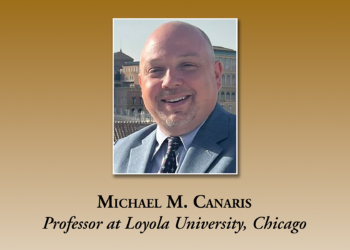
Originally from Collingswood, Michael M. Canaris, Ph.D., teaches at Loyola University, Chicago.



 at the bottom and then tap “Add to Home Screen”
