




“Where you from, friend?” the cheerful Virginia man asked when he heard my New Jersey accent and identified me as an outsider.
He was one of many people I met in the South who asked if I was saved, quoted John 3:16 and invited me to his church. The local attitude seemed to be that everyone was a potential convert, a soul to be saved.
That was many years ago. I can’t help but wonder now – if I was a different kind of outsider, not from another state but another country – if that man’s attitude might be different. If I was invited to his church, how would the congregation react if they learned I had entered the country illegally? Or if I asked them to pray for my parents who were undocumented?
The journalist Tim Alberta, an evangelical Christian, reports on a change among his fellow believers in his book “The Kingdom, The Power, and The Glory: American Evangelicals in an Age of Extremism.” “For generations, white evangelicals had been overwhelmingly supportive of both immigrants and refugees entering the United States,” he writes. No longer. “By 2020 they were, far and away, the least likely of any religious subgroup to advocate for either one.”
(To be fair, immigration is now a more problematic issue, and evangelicals are not the only Americans, or only Christians, who have become less welcoming to immigrants.)
Among those Alberta interviews are a couple who left their former church for one more overtly aligned with politics.
“We want to keep this country strong,” the man said. “Our compassion is focused on not taking us down a path to socialism.” His wife spoke more bluntly about immigrants. “They’re spreading all over the country, and they’re carrying all kinds of diseases, and they’re being moved under the cover of night. And look who’s doing it: the Catholic Church.”
Well …
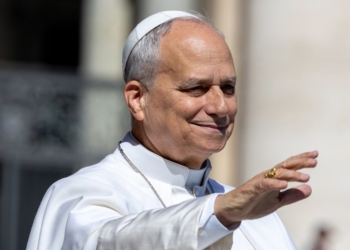
Rather than debate such views, better simply to listen to Pope Francis.
In 2017, the pope met with the Missionary Sisters of the Sacred Heart of Jesus, the religious community founded by Frances Xavier Cabrini, the patron saint of immigrants. She was the first U.S citizen – an immigrant herself, she was a naturalized citizen – to be canonized.
Immigrants, the pope said, need the benefit of well-crafted laws and development programs. But, he added, “they also need, always and first and foremost, love, friendship, human closeness; they need to be listened to, looked in the eye, accompanied.”
Many Americans make a distinction between immigrants with legal status and the undocumented. That’s understandable. But the justice of that dividing line is sure to be threatened by
efforts to purge large numbers of people from the country.
To that point, it’s worth reflecting on the popular musical “Les Misérables.” (President Donald Trump has included one of its songs on his playlist at his political activities.)
In the adaptation of Victor Hugo’s French historical novel, a local bishop gives Jean Valjean, who has been released after 19 years in prison, a second chance at life. Grateful and inspired, the former convict makes the most of it. But Javert, a police inspector, does not believe in mercy. He relentlessly pursues Valjean – even knowing he has become a productive member of the community – for breaking his parole years earlier.
It’s worth noting that Valjean’s original crime was stealing a loaf of bread for his starving nephew.
“Les Misérables” is not about immigrants, but it is concerned with issues at the heart of the immigration debate: poverty, family, law, justice and compassion. It is also, like Tim Alberta’s book about evangelicals, about the boxes we put people in, about the error of seeing people in only one way.
Alberta dedicated “The Kingdom, the Power, and the Glory” to his father. It begins with his death. Services were held in the church where his father had been senior pastor for 26 years.
At the viewing, Alberta was unaware that an influential political commentator had recently singled him out for criticism because of his political writing. But many who came to pay their respects knew, and they made mention of it when they greeted him. Some were playful, he recalls, but others were “cold and confrontational.”
Although they had known him since he was a child, Alberta writes, “they didn’t see a hurting son; they saw a vulnerable adversary.”
Bad manners.
The larger point is this: The Church emphasizes the inherent dignity of all persons and advocates justice and mercy for all – even political opponents, lawbreakers and outsiders. After all, everyone is a soul to be saved.
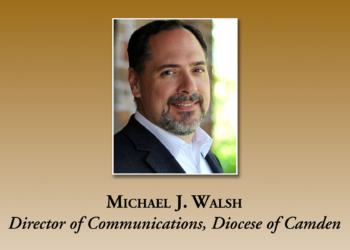
Carl Peters is former managing editor of the Catholic Star Herald.




 at the bottom and then tap “Add to Home Screen”
