






Before Miguel Pro was executed in 1927 by an anti-clericalist firing squad under the orders of Mexican president Plutarco Elías Calles, he stretched out his arms in imitation of the cross, and defiantly yelled “Viva Cristo Rey!” – “Long live Christ the King!”
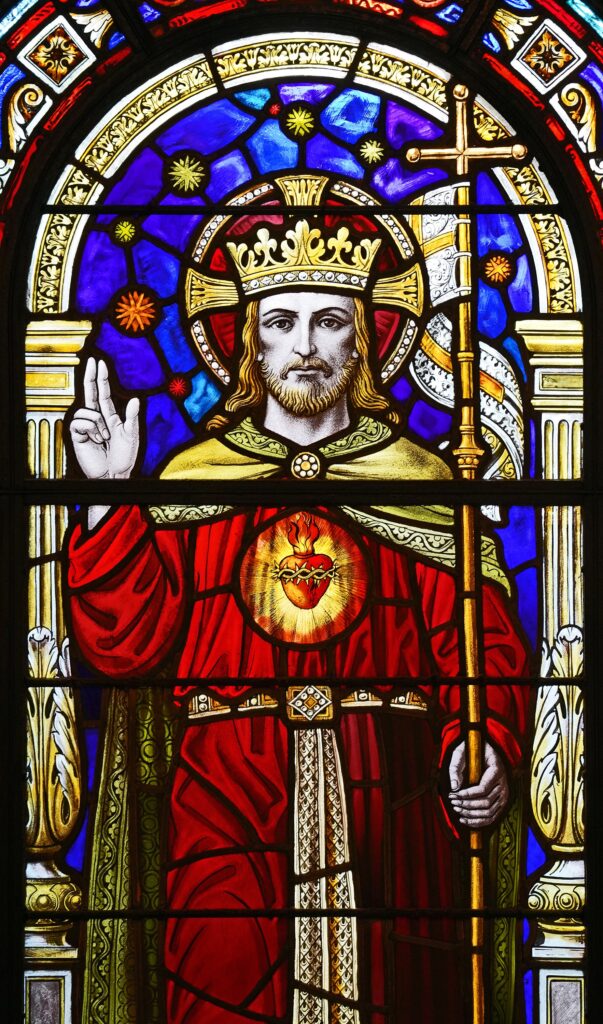
Only two years before, in 1925, Pope Pius XI had in his encyclical Quas Primas instituted a universal feast to be held each year honoring Our Lord Jesus Christ the King. Its title and placement as a closing celebration in the liturgical calendar were slightly altered by Pope Paul VI in 1969. It was thought that in recognizing this reign of a “kingdom which would have no end,” the growing secularization and nationalism of the 20th century could be counterbalanced by the Christian assertion that human political structures and organizations were in fact provisional and fleeting, and that humanity’s common connections under the Incarnate Word always superseded them.
I think that most Christians of any political persuasion can agree that we have not embodied these hopes as a culture to a sufficient degree in the century since, as today ideology divides not only society at large, but all too frequently the church itself.
In the Anglican tradition, the last Sunday before Advent is known as “Stir Up Sunday,” when many Brits have the tradition of preparing their Christmas pudding (sometimes called plum or figgy pudding in our familiar carols) well in advance so that it can macerate until Dec. 25. The name for the day is taken from the Book of Common Prayer’s opening collect for the liturgy: “Stir up, we beseech thee, O Lord, the wills of thy faithful people; that they, plenteously bringing forth the fruit of good works, may of thee be plenteously rewarded; through Jesus Christ our Lord.”
The “stirring up” of the pudding in the bowl is supposed to take place from East to West to honor the magi. Today this longstanding tradition has begun to blend with the celebration of Christ the King in many places, where Anglicans, Episcopalians, Methodists and Lutherans have also adopted the feast on that Sunday.
Pope Francis has consistently articulated a vision that promotes human fraternity and religious liberty (which is not only for Christians!) across geographical, denominational or existential boundaries. This is closely connected with Christ the King.
As he puts it, “The kingdoms of this world at times are sustained by arrogance, rivalries and oppression; the reign of Christ is a ‘kingdom of justice, love and peace.’ For a Christian, speaking of power and strength means referring to the power of the Cross, and the strength of Jesus’s love: a love which remains steadfast and complete, even when faced with rejection, and it is shown as the fulfillment of a life expended in the total surrender of oneself for the benefit of humanity.”
As with many of the biblical images and motifs, contemporary people live far removed from iconic realities that ancient communities knew well. Along with wine-presses, yoked oxen, oil lamps, and sheep and goats, language around kingship and feudal lords can sound increasingly foreign to us. They are too often considered the trappings of fables and lore, if not fanciful fairy tales or even oppressive regimes.
They certainly do not seem to be realities around which we can meaningfully structure our technological and fast-paced lives in a modern democracy.
Yet, the teachings of Cristo Rey speak with profound and practical relevance for us today, beyond even the series of inspiring schools in impoverished areas named for the title.
As Pius XI points out, this kingdom is radically inclusive, “opposed to none other than to that of Satan and to the power of darkness.”
He also makes clear the demands it imposes upon us: “a spirit of detachment from riches and earthly things, and a spirit of gentleness. [We all] must hunger and thirst after justice, and more than this, deny [ourselves] and carry the cross.”
If we are to consider ourselves dutiful subjects of the Ancient of Days in this life and the one to come, then all “peoples, tribes, and tongues shall serve Him” regardless of place of birth, socio-political situation, or generation (cf. Dan. 7: 13-14). And nothing is more practical than exhibiting our primordial allegiance to an Eternal Servant Leader through participating in his saving mission to a world in desperate need of it.
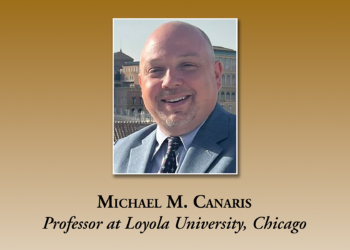
Originally from Collingswood, Michael M. Canaris, Ph.D., teaches at Loyola University, Chicago.
Ed. note: On a recent recorded episode of the Camden Diocese’s Talking Catholic podcast, Canaris joins hosts Mary McCusker and Mike Walsh and also Donna Ottaviano-Britt, director of the Office of Missionary Discipleship, for a discussion of Pope Francis’ third encyclical titled “Fratelli Tutti,” which focuses on the social and economic problems of current society; and proposes an ideal world in which all countries can be part of a “larger human family.”



 at the bottom and then tap “Add to Home Screen”
