



Sixty years ago, the council fathers at Vatican II recognized the indispensable role that formation and pedagogy played in the life of discipleship and in conscientious citizenship when they published the document “Gravissimum Educationis.”
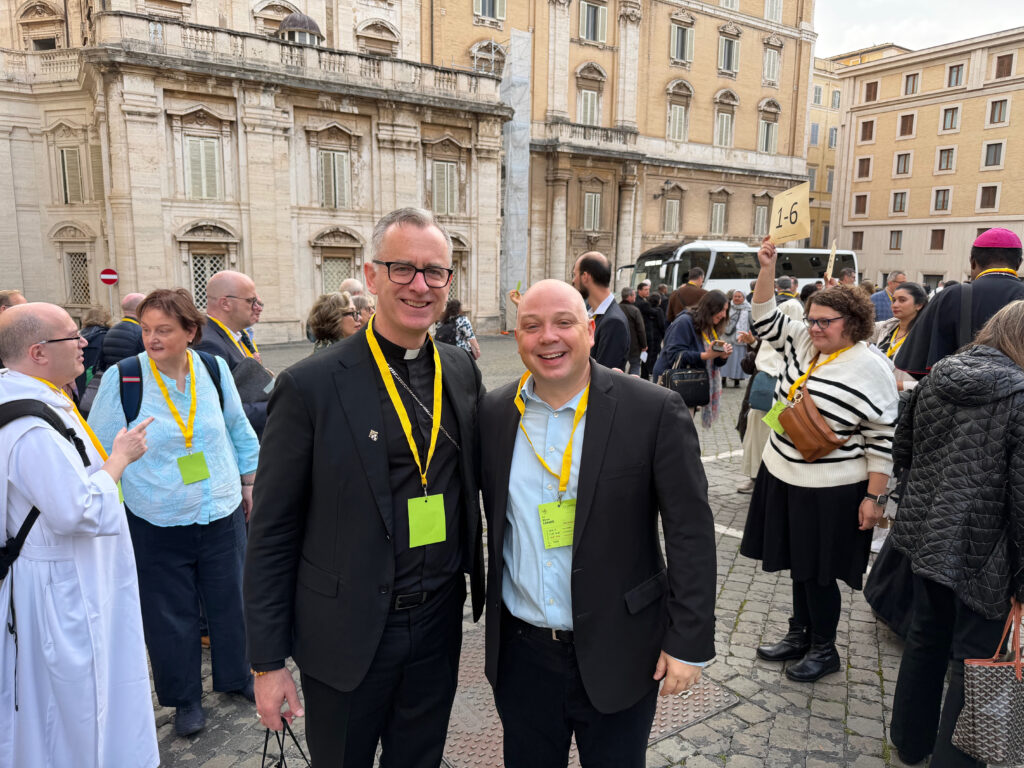
As a testimony to the relevance and ongoing interpretation of such insights, Pope Leo marked the anniversary Oct. 28 by publishing an apostolic letter titled, “Drawing New Maps of Hope” (“Disegnare Nuove Mappe di Speranza”). At the invitation of the Dicastery for Culture and Education, I was present in St. Peter’s Basilica for the signing of this text before a pontifical Mass as part of the Jubilee of the World of Education. This jubilee followed the Jubilee of Synodal Teams and Participatory Bodies, in which I also took part as a co-coordinator of a national network of universities implementing synodal leadership development on college campuses.
Many have been interpreting Pope Leo’s words and homilies in these twin jubilees as planting the seeds for his ongoing ecclesial vision and agenda. It is worth our time, then, to study and meditate upon this newest apostolic letter, the most formal of Pope Leo’s reflections over those remarkable six days.
The eleven sections of the relatively brief text all allude in various ways to the collaborative role that “teachers, students, families, administrative and service staff, pastors, and civil society” play in forming the “we” of an educational community. (§3.1) This dialogical and dynamic “constellation” of co-travelers has been given a new co-patron, Saint John Henry Newman, to serve alongside Saint Thomas Aquinas as chief intercessors for the Church’s educational mission.
For Pope Leo, all genuine education puts the person at the center of the enterprise: “helping them discover the meaning of life, their inalienable dignity, and their responsibility towards others. Education is not only the transmission of content, but also the learning of virtues. It forms citizens capable of serving and believers capable of witnessing, men and women who are freer, no longer alone.” (§5.1)
Multiple times, the text uses cognates of perhaps the most common refrain of this young pontificate: “a disarmed and disarming” approach to a life of faith and social relationships. The footnote following the first usage reminds us that these were among the very first words spoken on the loggia of St. Peter’s from the mouth of Pope Leo XIV following his election – along with, I might add, the reiteration, “We want to be a synodal Church!” The role that authentic education must play in this disarmament is, for the Holy Father, unambiguous.
Building on the council document and Pope Francis’ “Global Compact on Education,” Pope Leo adds three new priorities: (1) developing an inner life respectful of silence, discernment, and dialogue with one’s conscience and with God, (2) educating with a judicious use of technology and of AI, placing the person before the algorithm and harmonizing technical, emotional, social, spiritual and ecological intelligence, and (3) educating in non-violent languages, which focus on reconciliation, “bridges and not walls,” and where peacemaking becomes both the method and content of learning. (§10.3)
These quite personal priorities demonstrate with perhaps more clarity than any previous statements what Pope Leo wishes were unfolding in classrooms from kindergartens through doctoral programs, as well as in those most primordial lecture halls and tutorial spaces we ever encounter – our home lives. At home is where parents and children first co-write the primers of love, trust and ongoing understanding, on which we eventually build our entire worldviews.
His closing words inspire all those involved in education, which is to say all Christians, to be beacons of light: “not a nostalgic refuge, but a laboratory of discernment, pedagogical innovation and prophetic witness. Drawing new maps of hope: this is the urgency of the mandate …. [B]e servants of the world of education, choreographers of hope, tireless seekers of wisdom, credible creators of expressions of beauty. Fewer labels, more stories. Fewer sterile contrasts, more harmony in the Spirit. Then our constellation will not only shine, but it will also guide us: towards the truth that sets us free, towards the fraternity that consolidates justice, towards the hope that does not disappoint.” (§11)
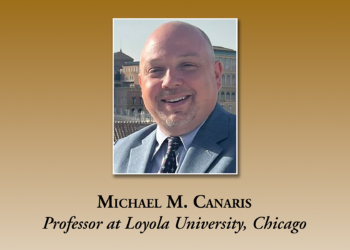
An alumnus of Camden Catholic High School, Cherry Hill, Michael M. Canaris, Ph.D., teaches at Loyola University, Chicago.



 at the bottom and then tap “Add to Home Screen”
