





When Pope Pius IX’s body was being transferred to its final resting place in the Papal Basilica of St. Lawrence Outside-the-Walls in 1881, angry anti-clericalist mobs attempted to interrupt the procession and throw the coffin into the Tiber River. Thankfully, they were dispersed, but the moment marked one of many notable moments in the 20 centuries of the Church, as the people of God commended their earthly holy father to the heavenly One.
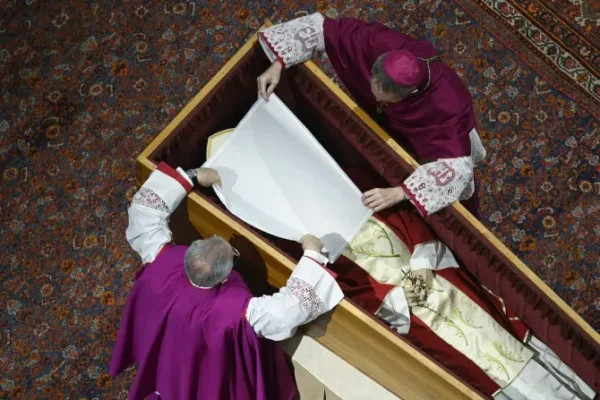
In recent decades, the Church moved away from earlier rites that were offered “cum maxima pompa” (with supreme pageantry). But the presentation of the pope’s body on a raised catafalque remained, while traditions like hitting him on the head with a small hammer, calling out his baptismal name, and the obligation of holding a feather over his mouth to see if he was still breathing were done away with.
Pope Francis continued his path of shifting some longstanding ecclesiological traditions in recent weeks, updating the protocols in the “Ordo Exsequiarum Romani Pontificis,” the official funeral rite for popes. The formal confirmation of the pope’s death will now occur in the papal chapel in place of his private rooms. There are some new provisions for being buried outside the grottos of St. Peter’s Basilica, as Pope Francis is the first to request to do so since Pope Leo XIII; though seven popes do already rest in his chosen location, St. Mary Major. It also aligns in some other ways with the curial reforms outlined in “Praedicate Evangelium,” and lessens some of the foramalities associated with the novendiales, the nine days of mourning following death.
But the most notable change for the vast majority of non-specialists is the mandate to have a humbler “viewing” before a more customary funeral Mass. Even the coffin itself will be simpler, as he has avoided the traditional three nesting funerary boxes of cypress, lead and oak. He said he wants to be memorialized more like “any other Christian,” and the Vatican clarified that he hopes to emphasize that the funeral is of a “shepherd and disciple of Christ, and not of a powerful man of this world.”
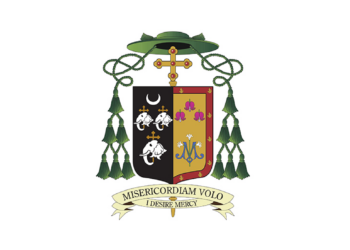
From his earliest moments in the Chair of Peter, the current pontiff has emphasized his role as “Bishop of Rome” and “Servant of the Servants of God” over many of the more exalted historical titles. His primary sense of identity, as evidenced in his very first formal interview after his election, made clear that he sees himself as “a sinner whom the Lord has looked upon,” a sentiment that is also captured in his papal motto often present beneath his crest: “Miserando Atque Eligendo.” This is usually translated into English as something like “mercy-ing him, he chose him.” He seems to be arguing now that like any other person of faith, his faults should not be papered over by spectacle and ceremony.
Pope Benedict XVI memorably eulogized the saint who preceded him in office by saying, “Today we bury his remains in the earth as a seed of immortality – our hearts are full of sadness, yet at the same time, of joyful hope and profound gratitude.” The Roman Missal says something similar about all who believe in Jesus: “In him the hope of blessed resurrection has dawned, that those saddened by the certainty of dying might be consoled by the promise of immortality to come. Indeed for your faithful, Lord, life is changed not ended, and, when this earthly dwelling turns to dust, an eternal dwelling is made ready for them in heaven.”
At this time of year, when the Church ends its annual liturgical cycle by focusing our attention on those who wait in buoyant expectancy for the final resurrection, pondering the death of a pope comes a bit more naturally. For most Catholics, the authentic prayers at every Mass for the Holy Father articulate a sincere desire that such a day is still far off in the future. However, when the inevitable comes, Pope Francis has assured us that at least for the foreseeable future, the sendoff for a different kind of loved one will look either quite novel or more familiar, depending on your perspective.
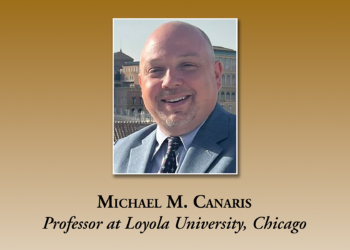
An alumnus of Camden Catholic High School, Cherry Hill, Michael M. Canaris, Ph.D., teaches at Loyola University, Chicago.



 at the bottom and then tap “Add to Home Screen”
