




As we approach the new year of 2021, we have an opportunity to reflect on the renewed emphasis that Pope Francis has placed upon the church to work tirelessly and to pray unceasingly for the unity that Christ so desires. Back in December, Pope Francis approved a document issued by the Pontifical Council for Promoting Christian Unity (PCPCU) titled, “The Bishop and Christian Unity: Ecumenical Vademecum.” This new document is 30 pages long and published in several languages, and was three years in the making. It is directed to the bishops of the church to help them fulfill what it describes as their essential role of promoting dialogue with other Christian leaders and believers. It offers a number of “practical recommendations” for establishing opportunities for dialogue with our separated family in Christ.
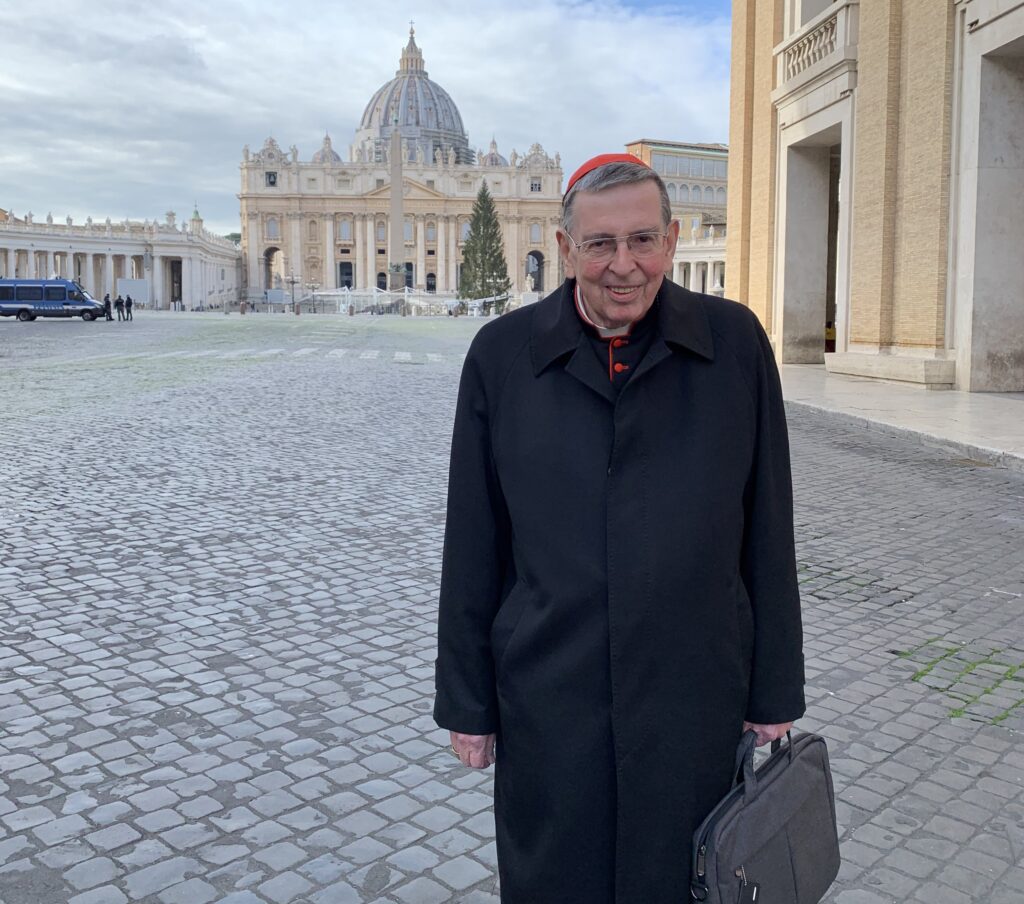
Cardinal Kurt Koch and Archbishop Brian Farrell, president and secretary of the PCPCU, explained in the preface of the document that each bishop of the church has a unique ministry of unity both within their diocese, with the Universal Church and with the separated Christians in their local area. They reminded bishops that the Code of Canon Law clearly delineates (in Can 383) that “He is to act with humanity and charity toward the brothers and sisters who are not in full communion with the Catholic Church and to foster ecumenism as it is understood by the church.”
They go on to emphasize, that “in this respect, the bishop cannot consider the promotion of the ecumenical cause as one more task in his varied ministry, one that could and should be deferred in view of other, apparently more important, priorities. The bishop’s ecumenical engagement is not an optional dimension of his ministry but a duty and obligation.”
Even the Eastern churches and their bishops are called to this task of unity and reminded in the new document that their particular Code of Canons of Eastern Churches states (Can 902- 908) that they are to “work zealously in participating in ecumenical work. In the service of unity, the bishop’s pastoral ministry extends not just to the unity of his own church, but to the unity of all the baptized in Christ.”
Cardinal Koch explained that the new Ecumenical Vademecum is a sort of “toolbox” for Catholic bishops both in the East and West. He said, “the Congregation for Bishops organizes an annual course for new bishops. And the new bishops have sometimes told us that they want to understand more about the subject” of ecumenism.
In conclusion they stated, “We place this work in the hands of the world’s bishops, hoping that in these pages they will find clear and helpful guidelines, enabling them to lead the local churches entrusted to their pastoral care towards that unity for which the Lord prayed and to which the church is irrevocably called.”
While the Vademecum does not necessarily introduce anything novel but, according to Cardinal Marc Ouellet, Prefect of the Congregation of Bishops, it is a document that hopes to encourage bishops to relaunch efforts in their local churches towards ecumenical dialogue. He said, “With the intensification of migratory flows, societies are becoming more and more multicultural, and it is dialogue with other religions that takes center stage.”
He added, “but I believe that this increases the importance of ecumenism. For us to be more credible, we must multiply our efforts.”
Drawing from some of the groundbreaking ecumenical texts of the recent past, such as the 1993 Ecumenical Directory and Pope John Paul II’s encyclical letter in 1995 Ut unum sint, the new directory reminds both bishops and their flocks that these documents call for the ecumenical formation of laity, seminarians and clergy. It reminds us all that “the ecumenical dimension of seminary formation is particularly highlighted and it is recommended that all seminarians should be given ecumenical experience. The document also considers the continuing ecumenical formation of priests, deacons, religious and lay people.”
As a priest dedicated to fostering greater Christian unity, I am heartened by this new document that reminds us of our unity in baptism and in the reception of the Holy Spirit. Ultimately, it is the work of the Holy Spirit to bring about the unity that Christ prayed for before he ascended to the Father. May the Spirit of unity touch all of our hearts and minds as we work together to bring his prayer to fruition.




 at the bottom and then tap “Add to Home Screen”
