




With political and racial tensions fraught, some voices keep calling for calm, and for an end both to tolerating grievous wrongs and to answering injustice with more injustice.
Among those voices for peace is Sarah Gilmore, a senior at Haddonfield High School. She discovered it didn’t take much effort to find others to join with her in prayer for a more just world.
“I had an idea for a prayer vigil, called my church (Christ the King Parish), and it was organized in a week and a half,” she says.
The event was promoted as “a prayerful response to raise awareness for justice and an end to violence.”
Gilmore reached out to her church after the Oct. 26 fatal shooting by police of Walter Wallace, a 27-year-old African-American male, in Philadelphia, and the unrest that followed. Wallace, who reportedly had mental health issues, was armed with a knife. An investigation of the shooting is ongoing, but the incident — fueled by heightened racial tension across the country since the death of George Floyd in May — soon was seen by some as an example of systemic racism. The city experienced peaceful protests and also clashes with police and looting that led to many arrests and a temporary curfew.
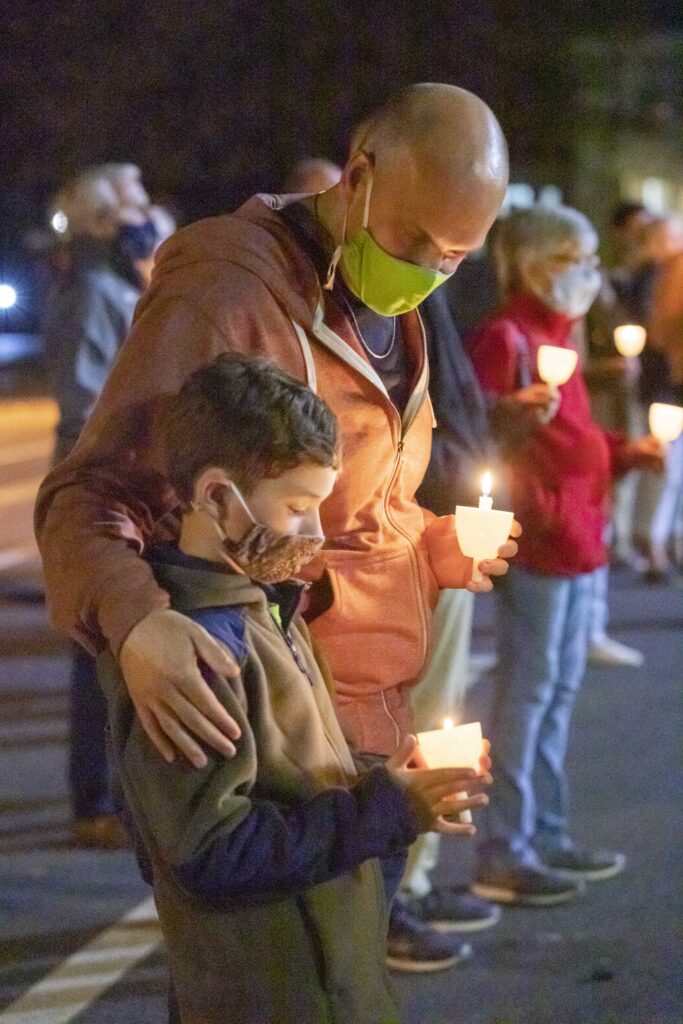
In Haddonfield on Nov. 6, parishioners gathered by candlelight service on the church parking lot. There was music and remarks from Gilmore and Father Jon Thomas, pastor of Christ the King Parish.
Father Thomas said afterward that events like the one organized by Gilmore can “help to mend the fabric of society where it has been torn by injustices.”
“A lot of people have really been distressed by the events of 2020. The church doesn’t have to be on the sidelines. It can be a meaningful forum for reflection and action,” he said.
In addressing the crowd gathered, Gilmore said that “many people feel that they are not accepted, or that their voices, their stories are not being heard.”
To stop violence, communities must open their “hearts to everyone,” she continued. “I want to live in a world where there is liberty and justice for all, and no one has to say, ‘What about us?’”





 at the bottom and then tap “Add to Home Screen”
