



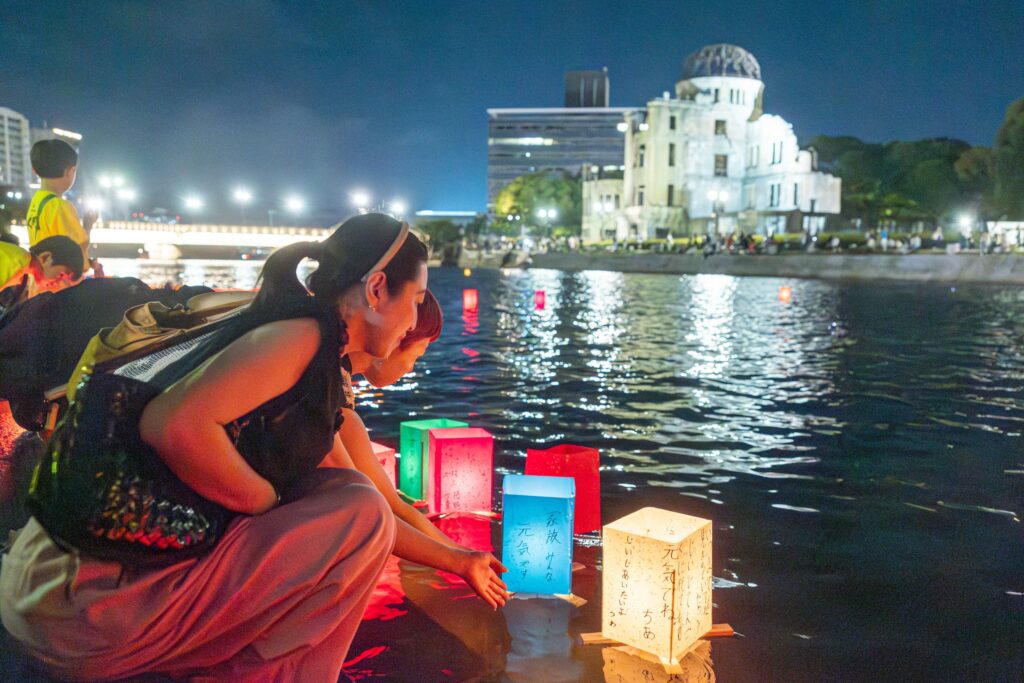
If a consistent theme has emerged from the first 100 days of the new pontificate, it has been the golden thread connecting peace and unity as Pope Leo’s overarching priority. Both of these are active and positive realities, not simply the absence of conflict or division. It makes sense then that a number of my closest colleagues organized a recent pilgrimage to mark the atomic bombings in Hiroshima and Nagasaki 80 years ago, in line with such aspirations.
In addition to nearly a dozen universities, a number of Vatican and national bodies, and a contingent of students, my colleagues were accompanied by the bishops of Chicago, Seattle, Santa Fe and Washington, D.C. The pilgrimage was coordinated in collaboration with the Partnership for a World Without Nuclear Weapons. These events heeded the calls from a number of recent popes to mark these memorials with action to “remember, journey together and protect” the world from its most existential threat – one powerful enough to end all human life on the planet tomorrow.
Theologian Dr. Michael Murphy told me, “The pilgrimage was a deeply moving, holistic affair. On the one hand, I was pushed to rethink my intellectual commitments, specifically on the nature and practicality of reiterating just war positions that lean on – too reflexively, I now think – an auto-pilot approach to policy. On the other hand, my experience was incredibly spiritually edifying and deeply needed.
“To witness first-hand the faith of Japanese Catholics, precisely the ones who kept the flame of faith hidden in the hills of Nagasaki for 250 years, was nothing short of transformative and inspiring. More, the way they welcomed me, the way they welcomed Americans from the nation who had perpetrated the bombings … was nothing less than astonishing. They know the dark possibility that resides in the human heart – they lived it uniquely in both their persecution and martyrdom – and so they now move through it and show us the path to mercy, peace and reconciliation. In a very tangible way, they showed us who Jesus is,” he said.
Most inspiring to me personally were friends I have known for years sharing photos and stories of their visit to the Nagatsuka Jesuit novitiate. Most of them know that I have a deep personal devotion to Father Pedro Arrupe, and am currently working on a book rooted in his writings. It was in this place within the blast zone where the medically trained Arrupe swept the books off his desk to do his best to concretely alleviate the suffering of people, many of them children, showing up in the streets around the house with flesh melting off their bodies, as he once described it. No more striking image could better represent to me the goals of pastoral theology in our day, albeit from someone who drives his wife to madness with piles of books continuing to accumulate in every room of the house.
In her opening prayer to the group, Loyola’s own vice president for mission integration, Dr. Claire Noonan, compared the experience to that of Abraham and Sarah. “It seems to me that we pilgrims of hope in this 80th year since the terrible detonation of nuclear weapons are having our own similar experience of generational transition. Among us are those who have seen with their own eyes the terrible destruction – and walked all of these many years with faith and hope for something better. They have pleaded with us, the second, third and even fourth generations, to build a true peace.”
Pope Leo has often offered similar supplications, for what he calls “disarmed and disarming communication.” (Audience with Representatives of the Media, 12 May 2025) From his perspective, this allows us “to share a different vision of the world and to act in a manner consistent with human dignity.”
As Cardinal Blase J. Cupich of Chicago pointed out, we can recognize that the blinding light of the incinerating flash that terrible August 6 morning is ultimately contrasted with the brilliance of the eternal glory of the Transfiguration, celebrated the same day.
He said, “On Tabor, God spoke from the heavens words of love and affirmation; in Hiroshima, the bomb falling from the skies announced human suffering and despair on an unimaginable scale. … This deep remembering keeps us focused on what is at stake. In this and every age, we are called to participate in God’s unfolding plan of salvation, always tethered to the very origins of creation and yet moving forward through the ages to come toward that final day when the court is convened, the books are opened and the Son of Man comes to receive dominion, glory, and kingship, uniting all peoples, nations and languages.”
In light of this truth, it remains for us to live out the promise: “Never again!”
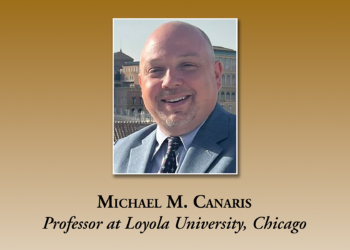
An alumnus of Camden Catholic High School, Cherry Hill, Michael M. Canaris, Ph.D., teaches at Loyola University, Chicago.



 at the bottom and then tap “Add to Home Screen”
