




For Ahmad Khan, the process of living in America began in 2014 when he was 24 years old.
The Afghan native had been working in his country with the U.S. military as a translator, and he, his parents and siblings started to receive threats, causing them to flee to various provinces throughout Afghanistan. The process for applying for a Special Immigrant Visa took more than two years, but he was ultimately resettled through Catholic Charities, Diocese of Camden.
“I’m so grateful to be here safely with my parents, but I can’t help but think of my brother right now – he’s a quadriplegic and is under the care of my cousins,” Khan reflected days after the Taliban’s assault on the country’s capital. “They’re still in Afghanistan, they’ve been in danger for years, and now they’ve in even more danger with targets on their backs. I worry about the safety of everyone in Afghanistan.”
Pausing, he said, “Please pray for me and for my country.”
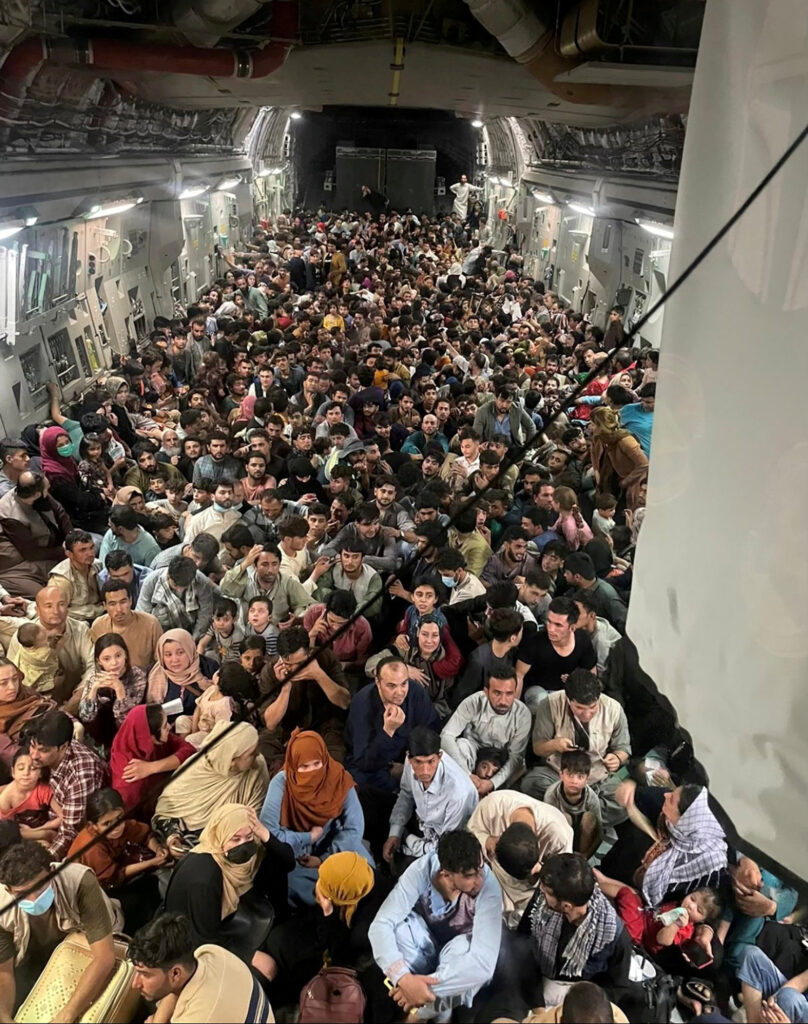
The United States’ withdrawal from Afghanistan has created a crisis for the tens of thousands of Afghans who worked with U.S., Afghan and NATO forces and remain in the country as the Taliban regains power.
Kevin Hickey, executive director of Catholic Charities Diocese of Camden, has overseen refugee resettlement and its everchanging landscape for years, as well as the agency’s program for Veterans Services – which provides a wide variety of assistance for veterans and their families, including those who served in Afghanistan.
Catholic Charities has welcomed and resettled multiple families from Afghanistan over the years through Special Immigrant Visas. These visas are given to those who are experiencing ongoing threats as a consequence of providing valuable service to the U.S. government.
“Afghan civilians working with our Armed Forces accompanied them through peril and danger,” Hickey said. “They guided our fellow Americans through the cultural maze of a foreign country. These friends of America and American troops need us now.”
Among those who needed a friend is Muhammad Abdul, who aided the U.S. and Afghan military in their fight against Islamist extremists.
“I’m very fearful for my family and everyone in the country. I’ve been in touch with my parents and cousins, and they worry about going outside because the Taliban actively looks for family members of people who worked with the United States,” he said.
Abdul’s life once seemed to resemble that of a typical young adult. He spent his early 20s pursuing a degree in teaching, landing his first job as an English teacher, getting married and financially helping his family members – except the year was 2013, and the place was war-torn Afghanistan. Despite already having a job secured, Abdul, an Afghan national, became an interpreter.
“If militants found out that I was working with the United States military, they would kill me right away,” Abdul explained. “I had to keep my job a secret, even from close friends.”
Despite precautions, Abdul began finding letters that were slid under the door of his home – threats promising death if he were to continue associating with joint U.S. and Afghan operations.
With the risk increasing, Abdul was granted a Special Immigrant Visa that allowed him and his wife to seek refuge in the United States.
“It took a year and a half for the visas to process,” explained Abdul, “but we ended up in the Philadelphia airport. I had nothing except a backpack with me.”
With the help of Catholic Charities’ Refugee Resettlement staff, Abdul found a job, received a promotion to a managerial position, and pursued a nursing degree at Camden County College, paying the tuition himself. Nursing, he explained, was a way to give back. He also volunteers with Catholic Charities, aiding with translations and helping clients find jobs.
“I feel like I have a gift when it comes to connecting with people. And I think as a nurse, I would have an opportunity to use that gift. I want to be able to help as many people get better as possible,” he said.
Editor’s Note: Names have been changed for the protection of the interviewees and their families.’




 at the bottom and then tap “Add to Home Screen”
