




ATCO – “Properly understood, creating sacred art is a corporal work of mercy … and a tool for evangelization.”
This was the central theme of a program Jan. 30 at Christ the Redeemer Parish, titled “Beautiful Thing: Proclaiming the Gospel Through Art.” The event was led by Jim Dessicino, parish catechetical leader at the Parish of Saint Monica in Atlantic City.
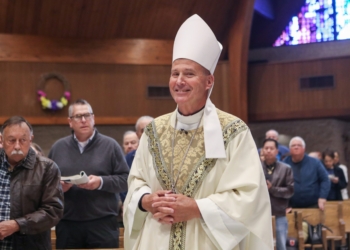
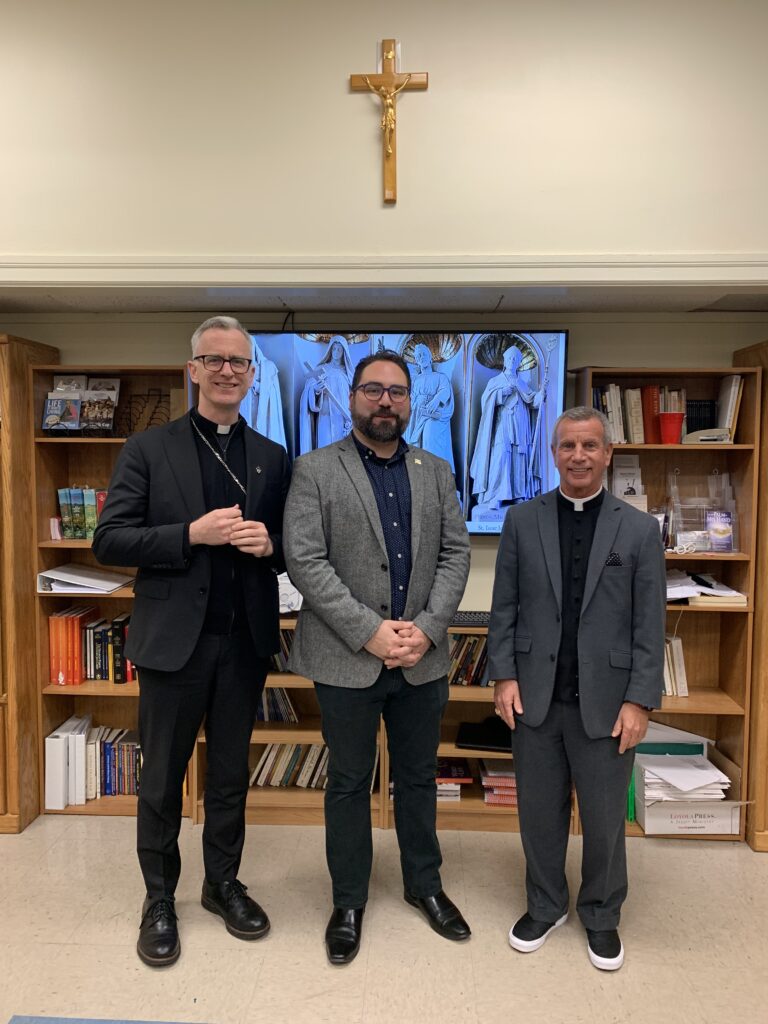
Through a presentation that combined slides, art history and Scripture, Dessicino guided attendees in understanding that “beauty is the great evangelizer.” The program drew a crowd that included Coadjutor Bishop Joseph Williams and Father Joseph Wallace, pastor of Christ the Redeemer Parish.
“We know beauty when we see it,” Dessicino said to those gathered in one of the parish’s religious education classrooms. “Beauty is how we come to know, through our senses, the two other transcendentals that we cannot see – truth and goodness.”
For this reason, he argued, Catholic churches should reflect beauty in the same way that the Gospel they proclaim is good and true.
However, he noted, this is not always the case. A professional artist and Sunday tour guide at the historic Saint Nicholas of Tolentine Church in Atlantic City, Dessicino has a deep appreciation for church design and decoration. The South Jersey native is also one of the few non-Italians to have led tours of Saint Peter’s Basilica in Rome.
“I care deeply about the beauty of churches, not just because I’m an artist, but because for those outside the Church, beauty is often the easiest way in,” he said.
To illustrate his point, he shared a personal story about a young woman he was traveling with in Rome. When they visited the Church of San Francesco a Ripa and viewed Gian Lorenzo Bernini’s 17th-century funerary monument Blessed Ludovica Albertoni, she was so moved that she wept.
“She turned to me and said, ‘Jim, I think I need to become Catholic,’” he recalled. “This woman had no formal encounter with Christ outside of images in churches. She is now in the OCIA program.”
Dessicino pointed to modernism in the 19th and 20th centuries as a turning point when art was increasingly separated from its traditional role in service to religion. As a result, he said, “beauty is hard to find” in contemporary church design.
One way to restore the sacredness of religious art, he emphasized, is by recognizing it as a corporal work of mercy. He referenced the Gospel of Matthew, specifically the story of the anointing at Bethany. When a woman pours expensive oil over Jesus’ head, the disciples criticize her, saying the oil could have been sold and the money given to the poor. But Jesus defends her act, saying, “She has done a beautiful thing for me.”
“We often make the same mistake as the disciples,” Dessicino noted. “We hesitate to beautify our churches due to cost or even sell them off rather than restoring them.”
Just as the oil poured on Jesus was not a waste, he argued, creating sacred art should not be viewed as an extravagance but as an act of mercy. “When Jesus is not visibly among us, we need visual reminders of His majesty,” he said.
Dessicino also connected the care and restoration of sacred spaces to Pope Francis’ vision for the Church, citing the Holy Father’s 2016 World Day of Prayer for the Care of Creation, in which he proposed that a new work of mercy involves contemplating each part of creation to discern God’s message.
Highlighting the legacy of Joseph Sibbel, a Bavarian sculptor of the 19th and early 20th centuries, Dessicino praised the artist’s dedication to producing works that inspire devotion. Sibbel’s craftsmanship is evident in many churches across the United States, including Saint Nicholas of Tolentine, where his Stations of the Cross and a statue of Saint Anthony of Padua remain sources of reflection and prayer.
“Sibbel’s artistic life was a work of mercy,” Dessicino said, explaining that the sculptor saw art as a means to “inspire devotion, preach, stimulate religious sentiment and edify.”
Like Sibbel, he urged today’s Catholics to give their best to God. “We should not let modernist concerns dissuade us from making beautiful things,” he said. “Though it may be expensive to hire a sculptor, painter or traditional architect, the beauty of these buildings will evangelize generations to come.”
Father Wallace echoed this sentiment, calling art “the medium through which the Holy Spirit works its wonders.”
Through these masterpieces, he said, the Holy Spirit conveys “the tenderness of God, the love of God, the sacrifice of the cross, and the communion of saints – the touchstones toward heaven.”



 at the bottom and then tap “Add to Home Screen”
