




This week, bones were uncovered in St. Augustine, Florida which archaeologists believe could potentially be linked to some of the Christian settlers there dating from as early as 1572. That is important because it sheds light on a common and prevalent misconception about American history.
First, let me make clear that I am a theologian and not a historian, and so I claim no expertise in these matters. However, one obviously cannot study ecclesial texts and traditions, and especially the processes by which doctrine and faith are handed on and received in various contexts (where I do profess a modest level of competency), without delving into the historical events that gave rise to such processes.
Many, many Americans either explicitly or implicitly espouse a sanitized and prevalent national narrative which has Pilgrims landing at Plymouth Rock, bringing Christianity with them in their search for religious freedom and setting up early communities in the wintry East Coast wilderness. In the subsequent post-colonial period and the eventual spread of “civilization,” such a view argues, these Founding Fathers carried their ideas with them in fanning out across the continent, gradually spreading their systems of belief southward and westward from New England and the Mid-Atlantic States. This parochial, almost self-congratulatory tale has in fact very little basis in reality.
Notwithstanding the somewhat melodramatic rhetoric of 1950s biographers, Jesuit historian John Leary painted a very different picture about early Catholic missionaries coming to the New World: “Before anyone had ever dreamt of Jamestown or Plymouth Rock, these men in black soutanes had pushed their way into Georgia. They had settled on five different spots in Florida, had ventured into the Carolinas, and had reddened the soil of Virginia with their blood…. Actually the Jesuits were a foundation only 15 years old [after being approved by Pope Paul III in 1540] when they sent their men to the New World. They have been in America ever since.”
Similarly, Archbishop Jose Gomez of Los Angeles has been quick to point out that Masses were being said on the West Coast of this country long before the white Mayflower inhabitants disembarked. An added layer to this conversation is the now over 40 percent of American Catholics who self-identify as Latino or Hispanic, a percentage that demographers insist will continue to rise over the next half-century, regardless of immigration policy. The influx of Irish, German, Polish and Italian Catholics who seemed to dominate life in many of the metropolitan dioceses for so long, were of course much later additions to the American scene than were the children of slaves who professed the Christian faith on this land or the Spanish missionaries dealing with indigenous peoples well before their arrival.
It seems important to me, in these times of intense political rhetoric, especially in terms of “making America great again” or “recapturing/reinstituting/redefining the American dream,” that we are honest about where we came from as a people and a church, as well as where we are headed. History, policy, culture and ethnicity are complex factors which cannot be dissociated from the processes by which we form our individual and collective identities. Thus, they also have roles to play in our lives of faith, even if we hope unreservedly to form a community as one Body without division (cf. Gal 3:28). Respect, integrity and honest willingness to look together at our past, present and future in charity and hope are ultimately demanded by Jesus Christ, who is himself the Lord of History.
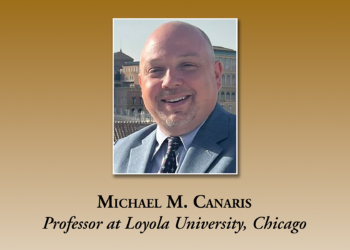
Collingswood native Michael M. Canaris, PhD, Loyola University Chicago.




 at the bottom and then tap “Add to Home Screen”