



In his 80s, frail and still, after many years, mourning the death of his wife, Martin Buber spent his time on his grand project of translating the Hebrew Bible into German and relaxing on his terrace.
“In doing so, one does, thank God, have one’s faith on one’s right,” he wrote to friends, “but one could not get along without humor on one’s left.”
Recent news items caused me to think about a couple of minor, but telling, incidents from Buber’s life. One involved a young girl, the other a Catholic priest.
The first item was the death of Yael Dayan a few months ago, on May 18. The daughter of the Israeli war hero and statesman Moshe Dayan, she was an author, politician and women’s rights proponent. But before her years of accomplishment and controversy, she was a teenager dissatisfied with, in her words, the “secular, non-religious environment that deified science and its laws.”
She and a friend wrote a joint letter to Buber seeking his advice. He invited the two 16-year-olds to visit him.
“He explained that the road to faith was intuitive and that love of our fellow men and creative work would also bring us to faith,” Yael Dayan remembered of their two hours with the old philosopher.
There was also this: “He answered our surely naive and childish questions patiently and lovingly, as though we were the first who ever struggled with these questions.”
Most widely recognized for his influential 1923 book, “I and Thou,” Buber was a university professor who left Germany in 1938 because of Hitler. He eventually settled in Jerusalem.
He became a renowned public intellectual, but after the war, he declined multiple invitations to return to Germany and lecture. In 1951, he was notified that he was the recipient of the annual Goethe Prize of the University of Hamburg “for promotion of international understanding.” Still, despite all attempts to persuade him, he resolutely refused to return to Germany to accept the honor. The great philosopher of relationships acknowledged that after the Holocaust, he feared he would be unable to face a German audience.
But he abruptly reversed his position after a German priest wrote “Responsibility: Thoughts on the Jewish Question” and sent it to him. In a short note to the author, Buber wrote that while reading it, “something had changed for me. It was once again possible for me to speak publicly in Germany.” He did not expand on his decision.
Reading the essay may have helped Buber overcome the natural tendency to associate all Germans with Nazism, Paul Mendes-Flohr writes in “Martin Buber: A Life of Faith and Dissent.” But surely, Mendes-Flohr emphasizes, the identity of the author was as important as the writing itself. The writer was Father Romano Guardini, who would become known as one of the most influential Catholic theologians of the 20th century.
Buber had admired and known Father Guardini since 1918, when the priest published his first book, “The Spirit of the Liturgy.” (Another admirer of that book was the future Pope Benedict, who is said to have titled one of his own books “The Spirit of the Liturgy” in honor of Father Guardini.)
Coincidentally, a week before accepting the Goethe Award, Buber learned that he was to be the fourth recipient of the annual Peace Prize of the German Book Trade. The previous recipient had been Father Guardini.
Buber was an ardent Zionist but one who argued for a binational state shared by Arabs and Jews, and he was concerned about the treatment of Arab refugees. (On Buber’s 84th birthday, David Ben-Gurion, Israel’s first prime minister, sent him a cable: “I honor and oppose you.”)
Buber donated the monetary rewards from the both Goethe and Peace prizes to an organization that promoted Arab-Jewish coexistence.
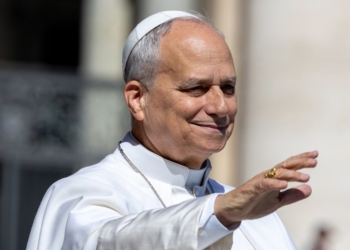
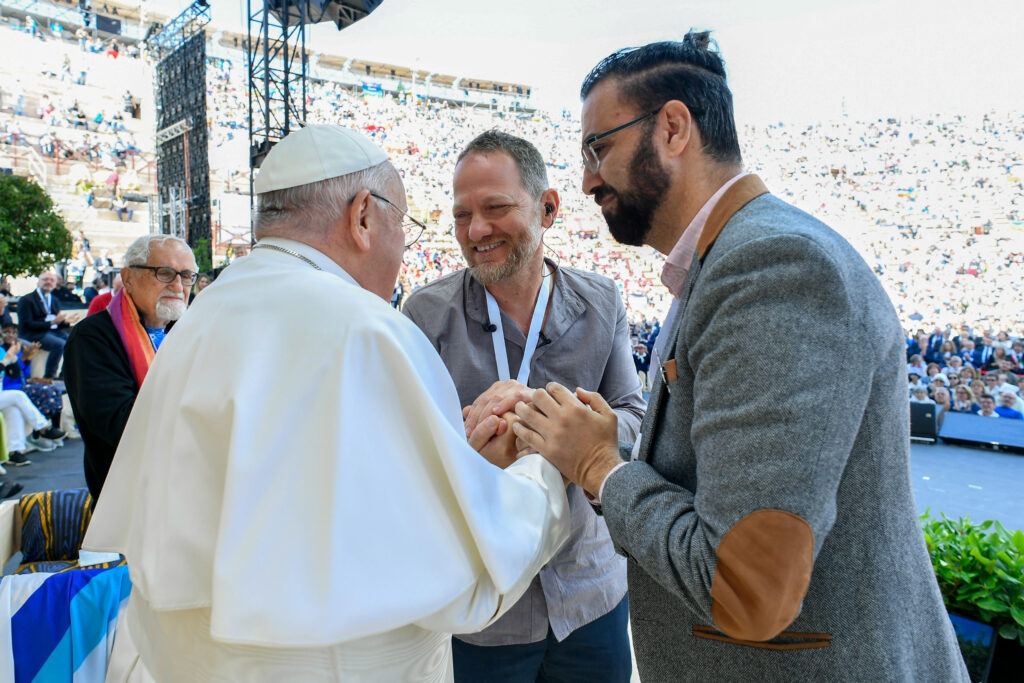
So I thought of Buber recently when I read about Pope Francis’ visit to Verona on May 18 for the “Arena of Peace” event. At that gathering, Maoz Inon, an Israeli whose parents were killed Oct. 7 by Hamas militants, and Aziz Sarah, a Palestinian whose brother was killed by Israeli soldiers, addressed the crowd together.
But also hovering over that event was the figure of Father Romano Guardini. In addition to Buber and Pope Benedict, another person the German priest influenced is Pope Francis.
As Pope Francis said in 2015, “I am convinced that Guardini is a thinker who has much to say to the men of our time, and not only to Christians.”
Carl Peters is former managing editor of the Catholic Star Herald.




 at the bottom and then tap “Add to Home Screen”
