



We Roman Catholics have certainly come a long way from the religiously divisive election in 1928 when the Catholic candidate for president, Al Smith, was nominated to run on the Democratic ticket that lost the general election.
The election of the nation’s second Roman Catholic President this month has been met with mixed reviews from fellow Roman Catholics and some surprising positive reviews from non-Catholics. It is a different situation for Roman Catholics in the United States in 2020 compared to the national view of a Catholic president back in 1960 with the election of our first Catholic President, John F. Kennedy.
Since President Kennedy’s win we have seen two Catholic vice presidents of the United States, Joseph Biden and Michael Pence (raised Catholic yet self-described as an Evangelical Catholic), as well as two first ladies, Jacqueline Kennedy and Melania Trump.
With the appointment of Amy Coney Barrett there are now six Roman Catholics out of the nine sitting on the highest court in the nation. In 2005 John Roberts became the third Catholic Chief Justice to preside over the Supreme Court. There are 22 Catholics (out of 100) serving in the Senate, 141 (out of 435) in the US House of Representatives — including the current House Speaker and current House Minority Leader. There are 17 Roman Catholic governors in the U.S. today. Catholics have held numerous cabinet secretaries, Secretary of State, Attorney General, Secretary of Defense, Secretary of Labor, Secretary of Housing and Urban Development, Secretary of Energy and Secretary of Treasury since the Kennedy administration.
Catholics have taken leading roles in the formulation of labor unions, social reform, the parochial school system, worker movements, peace movements and various social justice movements in the past centuries. Catholic teachings have had a profound impact upon some of the most important issues of our present day, including abortion, war and peace, immigration, the environment, housing, as well as a panoply of issues advocating the rights of the poor. American politics and policies have certainly been influenced by the teachings of Jesus Christ as taught by the Roman Catholic Church, by way of papal encyclicals and documents and stances taken by our collective body of bishops.
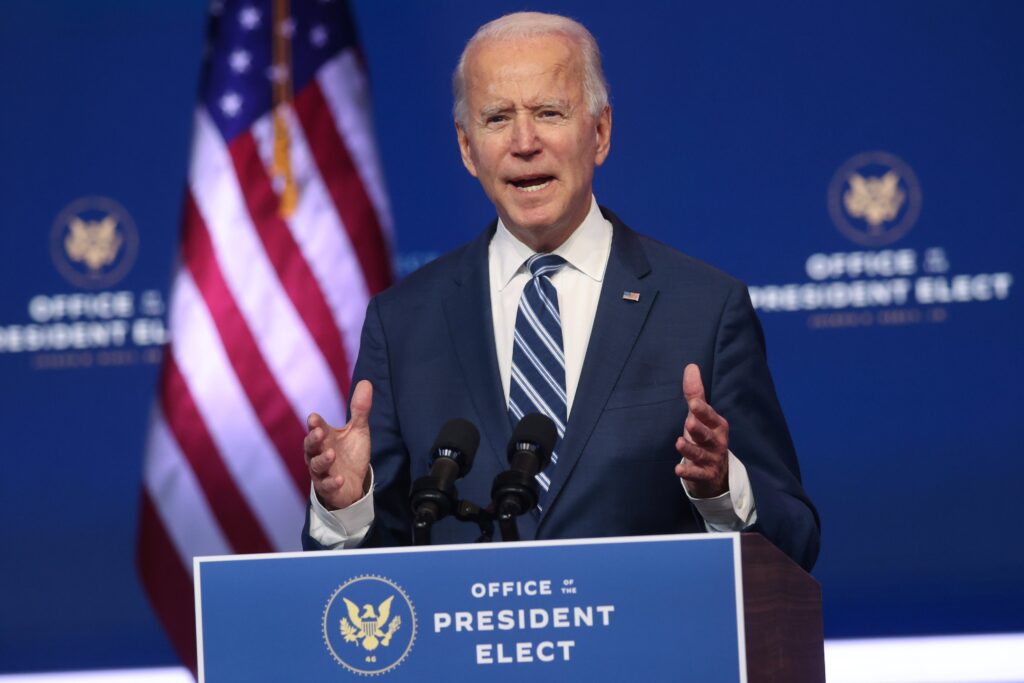
Now that we will once again have an American president who is Catholic we ponder how his faith will influence his governing. President-elect Joe Biden is certainly no stranger to the American people as he has been involved in politics for the past 47 years. He holds his faith in high esteem in his life. He attends Mass frequently and is proud of his faith that, we hope, will continue to influence his governing style.
Explaining how his Catholic faith will influence him he stated in his book, “Promises to Keep: On Life and Politics,” “I’m as much a cultural Catholic as I am a theological Catholic. My idea of self, of family, of community, of the wider world comes straight from my religion. It’s not so much the Bible, the beatitudes, the Ten Commandments, the sacraments, or the prayers I learned. It’s the culture.”
Shortly after his election win he wrote in an article for the Christian Post, “My Catholic faith drilled into me a core truth — that every person on earth is equal in rights and dignity, because they are all beloved children of God.” He added, “These are the principles that will shape all that I do, and my faith will continue to serve as my anchor, as it has my entire life.”
Our bishops were quick to congratulate President-elect Biden after his win noting his Catholicism. Archbishop Jose Gomez, archbishop of Los Angles and president of the U.S. Conference of Catholic Bishops, speaking for the U.S. bishops after the election said, “At this moment in American history, Catholics have a special duty to be peacemakers, to promote fraternity and mutual trust, and to pray for a renewed spirit of true patriotism in our country.”
The one issue where President-elect Biden and the bishops will certainly be at odds is the right to life of every human being from conception to natural death. He shares the view with many Catholic politicos in the U.S. in saying, while he personally believes that life begins at conception, he recognizes that not all in this country agree with this. Thus he says, “What I’m not prepared to do is impose a precise view that is borne out of my faith on other people.”
Let us pray for our new president, our nation, and that his formation in the Catholic faith will continue to influence and shape the way he governs as our national leader.





 at the bottom and then tap “Add to Home Screen”
