



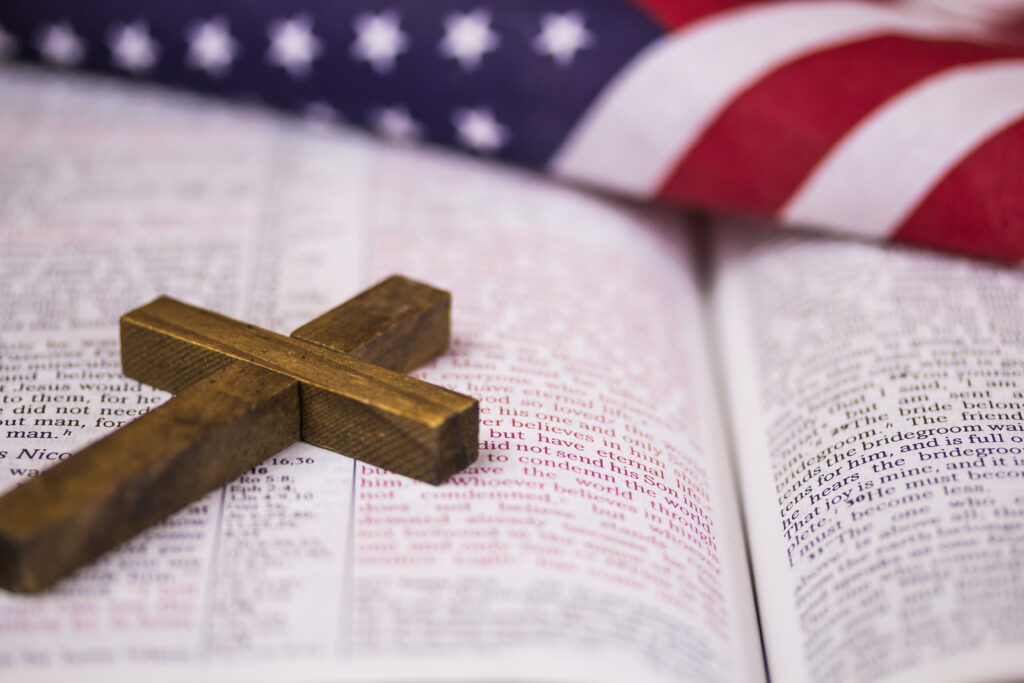
To better understand how faith can inform civil discourse, Catholics are invited to join both the New Jersey and Pennsylvania Catholic Conferences on Oct. 9 at 6:30 p.m. for a webinar on the upcoming election. The webinar is titled “Blessed are the Peacemakers.”
For two of the past three years, the New Jersey Catholic Conference – the public policy arm of the bishops of New Jersey – “has offered a ‘Faithful Citizenship’ webinar to help educate and inform Catholics about their civic responsibility, which Pope Francis considers a part of the mission of the Church,” said John W. Hardiman, NJCC’s director of communications and public relations.
Given the implications of the national election, Hardiman continued, “the Conferences of New Jersey and Pennsylvania felt the timing was right to partner for a joint webinar.”
“Faithful Citizenship” is an important initiative of the United States Conference of Catholic Bishops, he pointed out, “and while we highlight more during election season, it is something we promote year-round on our website and through regular communications to Catholics across New Jersey.”
The webinar will feature three panelists: James J. King, executive director of the NJCC; Emily Schumacher-Novak, USCCB associate director for education and outreach, Department of Justice, Peace and Human Development, and Eric Failing, executive director of the Pennsylvania Catholic Conference.
The jobs of King and Failing are “to represent the voice of the Catholic bishops of their states and the legislative agenda of the Catholic Church at the state and federal levels,” Hardiman explained. “Their roles as the head lobbyists for the Church in each of their states make them ideal to discuss the best practices in the public square when it comes to interacting with legislators and citizens alike.”
As “Faithful Citizenship” and “Civilize It” are programs of USCCB origin, Schumacher-Novak “can help provide deep insights into the role Catholics can play in returning civility to an otherwise polarized political climate,” he noted.
Dioceses and Catholic Conferences around the country have been invited by the USCCB to promote both the “Faithful Citizenship” and “Civilize It” initiatives as part of a national effort.
“The Catholic Church does not advocate for political candidates or parties,” Hardiman emphasized, “but it does work to inform and educate the faithful about forming their consciences in a way that is aligned with Catholic Social Teaching, which is the principle at the core of ‘Faithful Citizenship.’ In doing so, voters are asked to let their faith inform their politics versus the other way around.”
A concurrent video project spearheaded and coordinated by the NJCC features the bishops of New Jersey speaking to their diocesan communities on the moral responsibility of exercising civility in public discourse and forming their consciences to vote in light of Catholic Social Teaching.
“The Catholic Church calls for political engagement shaped by the moral convictions of well-formed consciences focused on the dignity of every human being, the pursuit of the common good and the protection of the weak and vulnerable,” the bishops say in the video. “Additionally, Catholics have a moral obligation to serve as peacemakers in the public square by being informed, engaged and respectful to all participants, whether they agree or disagree with our own personal views.”
Said Hardiman, “Hearing the message directly from the diocesan bishops puts an exclamation point on how important it is for Catholics to be informed and engaged and decide on candidates with Catholic Social Teaching in mind,” said Hardiman. “We are grateful that [our bishops] understand and appreciate the important role they play and are always willing to speak directly to their parishioners whenever the opportunity is available.”
To learn more about the webinar and to register, visit bit.ly/46ZEW3F. For more information on the NJCC and its initiatives, visit njcatholic.org.
EmmaLee Italia is a contributing editor for the Monitor Magazine, the Catholic publication for the Diocese of Trenton.




 at the bottom and then tap “Add to Home Screen”
