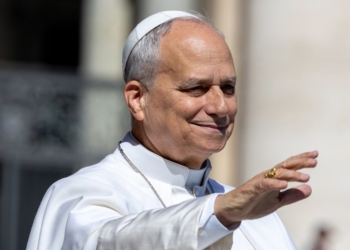





The Vatican confirmed this week that Pope Francis will be travelling to Assisi on Oct. 3, his first visit outside of Rome since the coronavirus lockdowns began. He will celebrate a private Mass in the crypt of the basilica dedicated to Saint Francis on the eve of his feast day, and officially sign what is technically the pope’s third encyclical.
The first, Lumen Fidei, is a composite document, as it is clear that Benedict XVI wrote the bulk of it before his resignation. The second was the groundbreaking letter on ecological concerns, which also had a Franciscan dimension, as its title Laudato Si’ is taken from Francis of Assisi’s Canticle of the Sun.
This new document, named Fratelli Tutti, will focus on social, political, religious and economic solidarity, as read through the thematic lens of human fraternity. The title has already raised some eyebrows, as its most literal meaning is “Brothers All.” But in Italian, as in other Romance languages, the masculine word can mean “siblings,” and so the official English translation of the title is “Brothers and Sisters All.”
I find it telling that he once again chose to use not Latin, but a vernacular language for the title, as he did with Laudato Si (Italian) and Querida Amazonia (Spanish).
Vatican Journalist Cindy Wooden has given us some glimpses of what themes are expected to be included under the aegis of fraternity: the equal dignity of all people, the preferential option for the poor, the universal destination of goods, the obligation of solidarity, care for the environment and the virtue of peacemaking.
There is an undeniable current of Franciscan spirituality that, along with an Ignatian one, courses through this pontificate and through the veins of Jorge Bergoglio. It is well known that upon hearing Brazilian Cardinal Claudio Hummes’ entreaty in the moment of his election “not to forget the poor,” Bergoglio felt compelled almost spontaneously to take the name Francis. (Multiple sources cite his comments between conclaves, that had he been elected in 2005 instead of 2013, he would likely have chosen the name John XXIV). But “il poverello,” the little poor one, which is the affectionate Italian moniker for Saint Francis, has played a determinate role in this pontificate from its opening moments. So much so, in fact, that when I teach courses on The Theology of Pope Francis and the Teología del Pueblo in Rome, I feel the need to take my students to Assisi for a few days to explore these connections firsthand. If this element of his thought interests you, I would recommend reading Leonardo Boff’s book “Francis of Rome and Francis of Assisi: A New Springtime for the Church.” If you wish to dig even deeper, no finer compendium of the pope’s intellectual and spiritual formation exists in English than Massimo Borghese’s “The Mind of Pope Francis.”
Despite our outsized and influential role on the world stage (and still, though dwindling, in the college of cardinals), the American landscape does not determine the timeline for major Vatican documents addressed to the global church. But there is perhaps a providential element in the fact that in the most divisive period in recent national memory, ahead of an incredibly contentious election, Christians and all people of good will are going to be blessed with a new spiritual, pastoral, and practical tool in combating the individualism and tribalism that so violently separate us from one another.
The solidarity we seek today can not be utopian, perfectionist or facile. Achieving it will certainly not be painless, as it must read both history and current events with searing and courageous honesty, perhaps even with “eyes cleansed by tears,” as the pope has said elsewhere. But as people of faith, we must hold fast to the belief that it can be accomplished, and that our human family across borders, boundaries, races and political parties can approach one another not with the “globalization of indifference,” nor with suspicion and acrimony, but rather with an authentic culture of encounter that recognizes the irrepressible dignity of those who appear in so many ways different from ourselves, but with whom we must unceasingly dialogue.
Our differences, when recognized, must be cherished and extolled, our familiar ecclesial and social power dynamics probed, our collective and interpersonal relationships re-examined and healed. After all, it’s with good reason that the encyclical isn’t titled “Identical Twins All.”
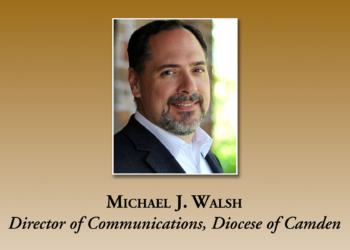
Originally from Collingswood, Michael M. Canaris, Ph.D., teaches at Loyola, University, Chicago.




 at the bottom and then tap “Add to Home Screen”
