




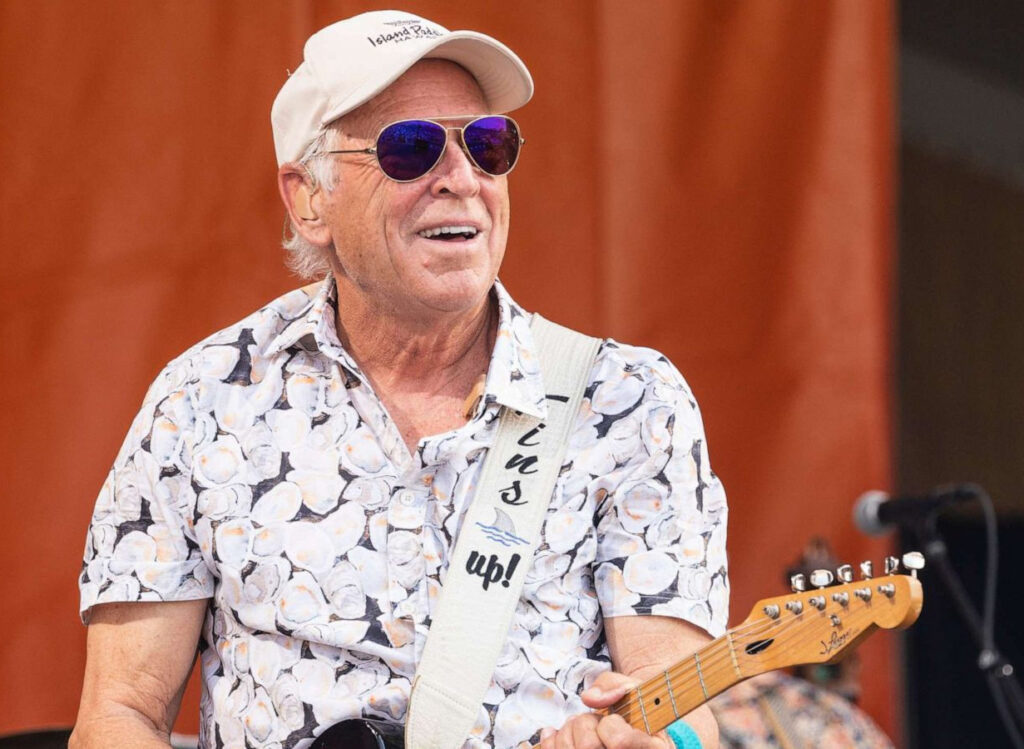
A simultaneous outpouring of grief and happy remembrances have flooded social media from within and outside the music industry throughout the last weeks after legendary singer-songwriter Jimmy Buffett passed away from an aggressive form of skin cancer on the first of the month.
Raised Catholic on the Gulf Coast of Mississippi and Alabama, Buffett was able to parlay his unique mix of reggae, calypso, southern country and island escapism into a billion-dollar combination of musical hits, books, restaurants, cocktails and even sports entertainment contributions. The home of the NFL’s Miami Dolphins was for a time named after his brewery, and they still play his version of “Fins” at home games. It’s nearly impossible to spend any time at the Jersey shore, too, and not hear the familiar anthems to sand, sun and spirits, whether holy or otherwise.
Of course, not all of Jimmy Buffett’s music aligns perfectly with a Catholic worldview. Temperance, restraint and modesty are not extolled in many of his lyrics. But the spiritual quest takes place not in a purer, higher realm but in the messiness of history, where “if we couldn’t laugh, we would all go insane.” Art, dance, literature and music all help us psychologically process frequent traumas that define the human condition – frailty, temptation, heartbreak and overindulgence – and to keep our sanity while we try to do so. As the pirate minstrel himself puts it: “Where it all ends, I can’t fathom my friends, If I knew I might toss out my anchor.”
The Caribbean region that is most associated with Buffett’s music holds a profound Christian history. In fact, the oldest Catholic diocese on current United States soil is San Juan, Puerto Rico, which was established in 1511, more than 275 years before Baltimore, traditionally recognized as the eldest sibling in American Catholicism. In terms of our region, New York, Philadelphia and New Jersey have some of the highest concentrations of Caribbean Puerto Ricans in the nation, alongside the Orlando metropolitan area. And while I wouldn’t of course claim his now iconic music represents the best of indigenous culture in the region, its economic impact through heightened tourism and breezy island marketing is undeniable.
There are literally hundreds of other locales throughout the Caribbean named after religious figures and devotions: From Our Lady – whether of Montserrat, of Guadeloupe, of the Good Winds (Bonaire), of the Rosary (Rosario) – to the Lord’s Day (Dominica), to saints Martin, Christopher (Kitts), Dominic, Vincent, Thomas, Lucia, George and Eustace, to the triune God (Trinidad), to the Holy Cross (St. Croix), to the 11,000 virgins massacred alongside St. Ursula in contemporary Germany for whom the British and U.S. chain of islands were named (BVI/USVI).
Buffett himself lived for some time in St. Barthélemy, named after the Apostle Bart(holomew), where the former was inspired by a lunch on the beach to write “Cheeseburger in Paradise.” Even the conflicting stories of how the most famous of lime and tequila cocktails got its name wind their way through the Spanish word for the daisy flower back to the woman’s name Margaret, a popular Christian name meaning “pearl” after the first saint to be recognized with it in Antioch in the fourth century.
Buffett was also a lifelong Saints fan and regular figure on the New Orleans social scene, the city that has often been called the most Catholic in the country – perhaps because of its carnival decadence as much as its European-inspired piety. Fasts and feasts always live in symbiotic harmony in Catholic life.
Jimmy Buffett once famously said, “Life is a journey that is not measured in miles or years, but in experiences.” And if our sometimes joyous, sometimes wild, often headache-inducing and always surprising journey together in this world can be imagined as one long celebratory weekend, our faith teaches us that when it eventually ends, “Come Monday, it’ll be alright.”
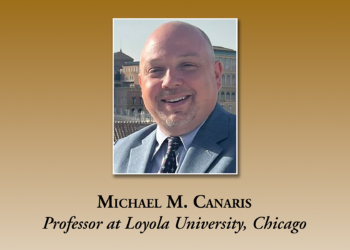
Originally from Collingswood, Michael M. Canaris, Ph.D., teaches at Loyola University, Chicago.



 at the bottom and then tap “Add to Home Screen”
