




ATLANTIC CITY – Experts in the norms and laws that govern the Roman Catholic Church came together for several days to reflect on their roles in light of the Holy Father’s call to missionary discipleship.
Some 350 canon lawyers from throughout the United States and beyond attended the 2019 Convention of the Canon Law Society of America on Oct. 14-17 at Bally’s Atlantic City Hotel here. It was a time, in short, to examine both the letter of canon law — with specialized workshops like “Canon 1071 and Licit Assistance at Marriage” — and the spirit of the law, addressed in workshops such as “Justice and Mercy in the Distribution of the Salvific Goods of the Church.”
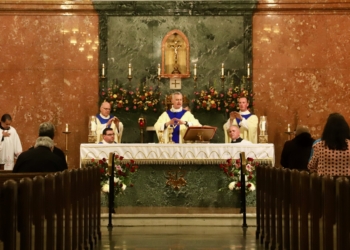
But as Father John Donovan of the Diocese of Syracuse, New York, said, canon law cannot be separated from the Gospel values on which it is based. In his homily at the convention’s closing Mass on Oct. 16, Father Donovan said, “Our role is to accompany people on their faith journey, even in contentious situations.
“We have very needed skills,” he continued. “As missionary disciples, we cannot let our skills get in the way of those we serve.”
The Code of Canon Law is the codified body of general laws governing the Catholic Church. Canon lawyers bring their expertise and judgement to a wide variety of situations, including clergy abuse cases and marriage annulments.
Jay Conzemius of the Diocese of Pittsburgh, who was installed as the organization’s new president, stressed that canon lawyers — like most people who work for the church — have the responsibility of promoting Christian values in a society that is becoming increasingly secularized.
Church law is not a system designed to restrict individual freedom. It is, he said, a set of objective standards to ensure fairness and justice for members of an ancient, holy and worldwide church.
Determining truth in a given situation is important, he stressed. In a situation regarding an accusation of clergy abuse, for example, civil laws regarding the statute of limitations are immaterial, he said. The only thing that matters, he said, is whether, not when, the abuse took place, because the church applies a zero tolerance policy in these cases.
Conzemius, who at one time considered the priesthood, said that about 50-60% of the country’s canon lawyers are priests; the others are deacons, religious or lay people. “I’ve been doing this for 22 years,” he said. “It saves a priest, who is needed in the parish. Many priests are overburdened these days.”
He added that the professional fraternity and support of the convention is important because of the varied backgrounds and resources available to the participants.
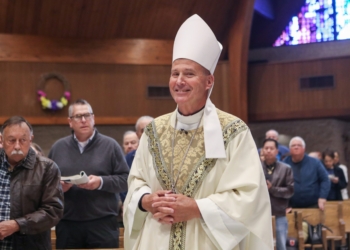
Bishop Dennis Sullivan welcomed the participants on Oct. 14 and celebrated the closing Mass on Oct. 16. Auxiliary Bishop Andrew H. Cozzens of Saint Paul and Minneapolis gave the keynote address, urging participants to meet the challenge of evangelizing with joy even as the church has been compromised by scandal.



 at the bottom and then tap “Add to Home Screen”
