





The Israel-Iran conflict is a geopolitical divide rooted in ideological, religious and political differences and disagreements over many decades. Since the Iranian Revolution in 1979, Iran has adopted a strong anti-Israel stance, refusing to recognize Israel and supporting groups like Hezbollah and Hamas that oppose Israel. In response, Israel views Iran as an existential threat, particularly due to its nuclear ambitions and negative influence in the region. This ongoing conflict is characterized by proxy wars, cyberattacks and intelligence operations rather than direct military confrontation. Key flashpoints have included disputes over Iran’s nuclear program, seen by Israel as a major security risk to the very existence of the sovereign state. This has led to Israel acting militarily and swiftly in the past week.
Over the years, Iran has engaged in hostile actions and rhetoric against Israel. Iran’s 86-year-old supreme leader, Ayatollah Ali Khamenei, routinely says Israel is an “illegal and filthy Zionist regime,” and a “cancerous tumor in the very heart of the Middle East” that “should be wiped off the face of the earth.”
Islam has two major sects: the larger Sunni and the smaller Shia. Iran has a predominantly Shia Muslim population. The main difference between Shia and Sunni Muslims is in their different interpretations of Islamic leadership after the death of the Prophet Muhammad. Sunnis believe the prophet’s successor should be chosen by the Muslim community, while Shia Muslims believe that the prophet designated his son-in-law, Ali, and his descendants as the rightful successors, known as imams.
Iranian Shia Muslims also adhere to Mahdism, which is the belief in the imminent return of the Mahdi. The Mahdi is the prophesied savior who will rid the world of evil and establish justice and peace before the end of time. Many in Iran adhere to a more militant interpretation that will hasten the arrival of the Mahdi. Others in Iran say the very existence of Israel is an obstacle to the Mahdi’s return. This Iranian subgroup believes a conflict with Israel is necessary for the return of Mahdi, who will then defeat Israel.
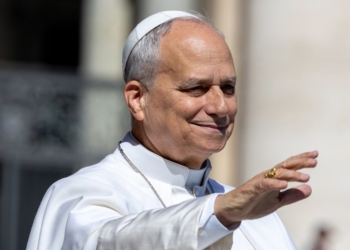
Amid the conflict, Pope Leo XIV has urged the parties to act responsibly and reasonably. He has called on both sides to pursue dialogue and work toward a safer world “free from the nuclear threat,” adding that “no one should ever threaten another’s existence.” The pope also said that “it is the duty of all countries to support the cause of peace, initiating paths of reconciliation and promoting solutions that guarantee security and dignity for all.” In Iran, the Archbishop of Tehran-Ispahan, Cardinal Dominique Joseph Mathieu, also has shared his sorrow over the conflict. He advocates for peace through consensus-based dialogue.
Roberto Cetera, Middle East correspondent for the Vatican newspaper L’Osservatore Romano, wrote in a recent article, “The risk that the piecemeal world war, denounced by Pope Francis, could evolve into a full-scale global conflict has rarely felt more real. … The critical question now is whether Israel’s military action will contain the threat or dangerously widen the conflict, potentially beyond the region.”
Father Joseph D. Wallace is diocesan director of Ecumenical and Inter-religious Affairs and pastor of Christ the Redeemer Parish, Atco.




 at the bottom and then tap “Add to Home Screen”
