



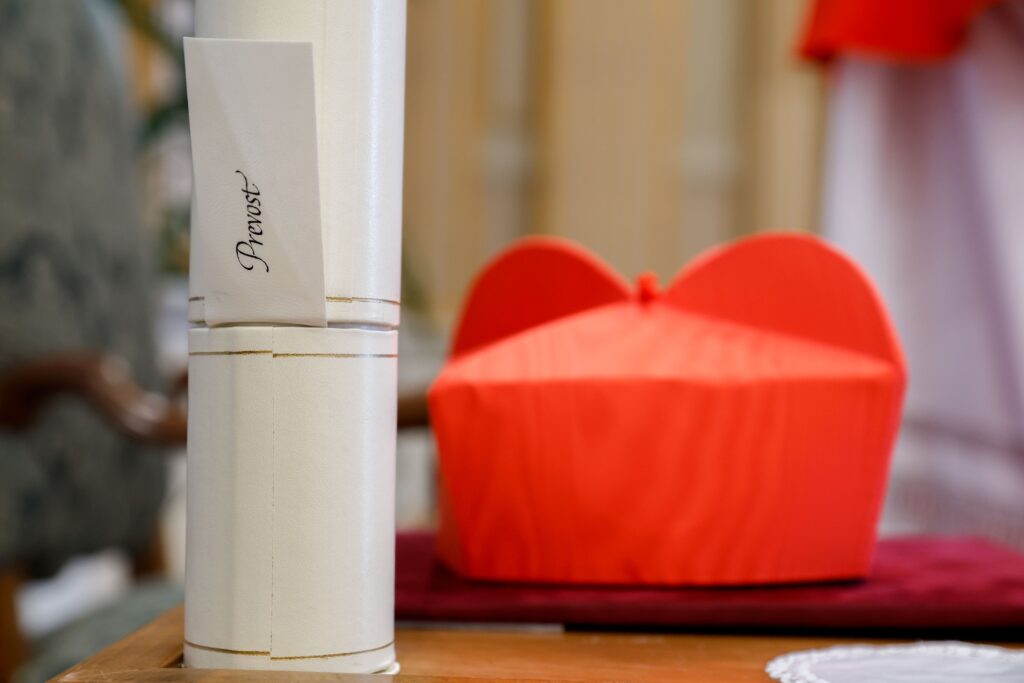
While the logistical and structural realities of the College of Cardinals led many observers to surmise that Pope Francis might name a new class of Church leaders to the rank in the next six to 12 months, even the most informed were caught off guard when he announced a new consistory during his Angelus prayer on Oct. 6.
Though by all accounts the pope is relatively healthy, it is evident that he’s working to guarantee his legacy by stamping the college with those sympathetic to or aligned with his ecclesial vision and agenda. When he bestows the red hats on the next class on Dec. 8 – a few days before he turns 88 – it will be the 10th such event of his 11-year pontificate. He will add 20 electors for a future potential conclave to the 121 eligible on that date, assuming none pass away between now and then. Only one of the incoming cardinals, Archbishop Angelo Acerbi, is not able to participate in selecting the next pope since he is older than 80 – in his case, well over the limit, as some reports surmise at 99 he will become the oldest prelate to ever receive the simultaneous honor and charge.
As has been his practice, the pope chose pastors and officials from outside traditional corridors of ecclesial influence. Peru, Argentina, Chile, Ecuador, Serbia, Ivory Coast, Algeria, Indonesia and Iran were among the nations he scoured for help in running the global Church. Oceania was included, as he called upon the 44-year-old leader of the Ukrainian Greek Catholic Church for the diaspora in Australia. Japan and the Philippines received one a piece, as the Vatican increasingly turns its face eastward.
The only one from North America was Archbishop Francis Leo of Toronto. Some Italians and familiar faces in Rome were included in the list, such as Msgr. George Jacob Koovakad, who helps plan papal trips; Father Fabio Baggio, who leads some of the Vatican’s work with migrants and refugees; and Father Timothy Radcliffe, a British theologian given prominent spiritual roles in leading delegate retreats during the ongoing Synod on Synodality.
While the United States did not receive any new cardinals, it still has the second-largest number of electors in a potential conclave, behind Italians. As large as our nation is, we still have among the smallest cardinal-per-Catholic ratios. That is to say, we have 10 electors “representing” roughly 65 million American Catholics. Brazil will now have seven electors for 177 million baptized Catholics; Mexico will still have the current two for 100 million; all of Africa will now have 19 for more than a quarter of a billion believers. That is after Pope Francis has named more cardinals from Sub-Saharan African than any other region during his papacy.
While speculation about how a future conclave may play out is fodder for online blogs and innumerable leisurely long meals in Rome, we know well that the Holy Spirit and the course of human history can intersect for any number of unexpected twists and turns. Yet, this “October surprise” ensures that Pope Francis will have named well over the two-thirds of electors necessary to select a successor.
They are a broad and variegated group, who frankly do not know much about one another in many cases. So, thinking of them as a unified voting bloc “all singing from the same hymnal” in terms of their perspectives on Church governance and ecclesiology is not accurate. But it’s quite clear that this significant papacy will undeniably mold the shape of the Church to come for the rest of the natural life of anyone reading these words.
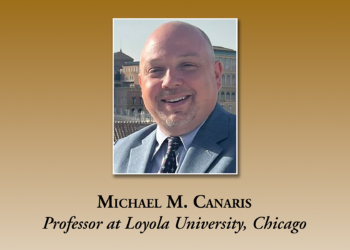
An alumnus of Camden Catholic High School, Cherry Hill, Michael M. Canaris, Ph.D., teaches at Loyola University, Chicago.



 at the bottom and then tap “Add to Home Screen”
