
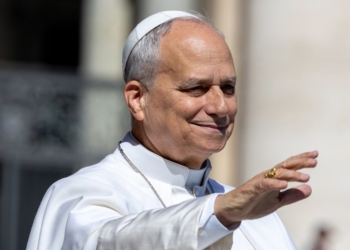





Pope Francis has just had a new book published, “Let Us Dream: The Path to a Better Future,” which is based on a number of conversations he had with Austen Ivereigh, a papal biographer. He speaks on a number of varied topics and crisis in the world and the church. He touches on issues such as the coronavirus, environment, poverty, hunger, political polarization, the proper role of women, racial injustice, the arms trade and a number of other contemporary issues facing the world today. He also touches upon a rather neuralgic subject for Chinese leaders as he addresses the persecution of a minority in China known as the Uyghurs. He said in the book, “I think often of persecuted peoples: the Rohingya, the poor Uyghurs, the Yazidi — what ISIS did to them was truly cruel — or Christians in Egypt and Pakistan killed by bombs that went off while they prayed in church.”
This one brief mention of the Uyghurs in his book has infuriated the Chinese government. In the past Pope Francis has shied away from criticizing the mistreatment of the Uyghurs because of the delicate negotiations with communist China over the treatment of the Catholic Church in China.
The Uyghurs are an ethnic minority living in China’s autonomous northwestern Xinjiang province. They are mostly Muslim and ethnically and culturally closer to Central Asian nations such as Kazakhstan and Turkmenistan than China. They have lived in the Xinjiang province for over 1,000 years before they were annexed by China in the 18th century. There are some 11 million Uyghurs in Xinjiang today, about 60% of that region of China.
Chinese leaders have for decades persecuted Uyghurs because of their differences culturally with Han Chinese, who are the ethnic majority in China. They are also under suspicion for their adherence to Islam. Due to these tensions and a series of terrorist attacks that were perpetuated by some radical Muslim Uyghurs, the Chinese government began a brutal crackdown in the entire region that has resulted in an estimated 2,000,000 Uyghurs and other minority ethnic groups being indiscriminately detained into concentration camps without charges or trials. China claims that these concentration camps are simply “vocational centers” needed to provide job training and Mandarin lessons to help Uyghurs better assimilate into Chinese society.
U.S. State department experts have reported that over 2,000,000 Uyghurs and other minority groups in China have been taken to these huge concentration camps in Xinjiang. They have found that inmates in these camps are regularly subjected to indoctrination, physical abuse and sterilization. The U.S. Congress has introduced two bills aimed at sanctioning individuals responsible for the mass detention of Uyghurs, which seem to have been set aside over all the attention stemming from the COVID-19 pandemic.
Even though the pope did not elaborate on the suffering of the Uyghurs in his book, the very mention of them as a persecuted people has angered the Chinese government. During a regular press briefing, the Chinese Foreign Ministry spokesperson Zhao Lijian said that Pope Francis’ inclusion of Uyghurs on his list of persecuted peoples was “totally groundless.”
“There are 56 ethnic groups in China and the Uyghur ethnic group is an equal member of the big family of the Chinese nation. The Chinese government has always treated all the minority groups equally and protected their legitimate rights and interests,” he added.
Vatican diplomats as well as Pope Francis are always careful to avoid antagonizing the Chinese government because of their delicate negotiations over the fate of Catholic Chinese. The Vatican entered into an agreement with China in 2018. The details have never really been made public. Prior to the agreement Beijing had long insisted on having the final say on all bishop appointments in mainland China, while the Holy See insists that only the Holy Father should have such authority.
Officially, there are about 6,000,000 Catholics in China. When speaking of the agreement with China, the Vatican said the deal “is of great ecclesial and pastoral value” and said that it “intends to pursue an open and constructive dialogue for the benefit of the life of the Catholic Church and the good of the Chinese people.”






 at the bottom and then tap “Add to Home Screen”
