






“What do you do when the middle school students you are teaching ask if you have killed anyone – and are horribly disappointed when you say no?” Phil Klay, a Catholic and former Marine, asked when accepting the 2014 National Book Award.
His book, “Redeployment,” consists of 12 stories concerning the war in Iraq (he served there from 2007-08). Although fiction, they depict a far more realistic conflict – more profane, morally fraught and precarious – than what American adolescents can imagine.
About a month before the United States began bombing Iran this year, a military honors service was held at a veterans cemetery in Virginia for my friend, a Bronze Star recipient who served as an Army helicopter pilot in Vietnam. We were so close that we had been the best man at each other’s wedding. He talked to me about the war, and I listened and asked questions, but I think we both knew I would never truly understand what he experienced.
I remember him once saying, after telling me about a tragedy he witnessed, “That’s how cheap life was there.”
In her book on war photography, “Regarding the Pain of Others,” Susan Sontag argued that photos can never fully capture the reality behind the images. She also raised the question of whether repeated exposure to pictures of atrocities dulls our sensitivity to them.
Sontag’s essay was published in 2003, when most Americans still got their news from television. She died a year later, in 2004 – the same year Facebook was created. Today, the federal government uses social media to promote its war efforts with memes featuring images from movies and television shows, sports and video games, and cartoons. In an endless loop on X, SpongeBob SquarePants asks, “You want to see me do it again?” – after aerial video footage of a military explosion.
In one of Phil Klay’s stories, a character is described as “having a leadership style that goes over well with 19-year-olds before they’ve actually been to war.” The title of the story, “Prayer in the Furnace,” comes from the tale of Jews forced into a white hot furnace for refusing to worship a golden statue, as told in the Book of Daniel. (Dn 3:24-90) The hymn they sing is sometimes referred to as “The Song of the Three Holy Children.”
Klay’s story is narrated by a Catholic military chaplain. After a memorial service for a fallen soldier, he thinks, “Geared up, Marines are terrifying warriors. In grief, they look like children.”
One day, the priest tells a small group of Marines at Mass about a desperate Iraqi man he met whose daughter had just been seriously injured in a household accident. American military doctors were able to save her life.
But, the chaplain said, the father wasn’t grateful. He told the priest he sought American help because they had the best doctors, but he also said he had a son who had been killed during the war. He said he had relatives who had been tortured to death, and that he and his wife had been assaulted by American soldiers in their own home.
The chaplain said he had been told the Iraqi father was “a bad man.” But he went on to say, “Maybe you don’t think it’s worth trying to understand the suffering of that Iraqi father. But being Christian means we can never look at another human being and say, ‘He is not my brother.’”
One night, mourning the death of another Marine and hearing that American soldiers might have committed war crimes, the priest struggles to pray. What should he be asking of God? He concludes, “I asked Him, finally, for grace.”
To pray for grace is to admit one’s own limitations and humbly seek God’s help. As Solomon did.
Solomon’s renowned wisdom was a gift from God. The young king acknowledged his youth and inexperience when he became leader of a vast, prosperous nation with a strong military. Humbled by his new responsibility, he asked God to give him “a listening heart” to serve his people well.
God was pleased Solomon did not ask for riches, power or the death of his enemies. Because he asked instead, selflessly, for the ability to rule wisely, God granted Solomon’s request. (1 Kings 3:5-12)
As Americans, we cannot grant our leaders wisdom. So we hold elections, have politicians and officials take oaths, and hope for the best. We can only pray they demonstrate a realistic understanding of the consequences and unpredictability of war.
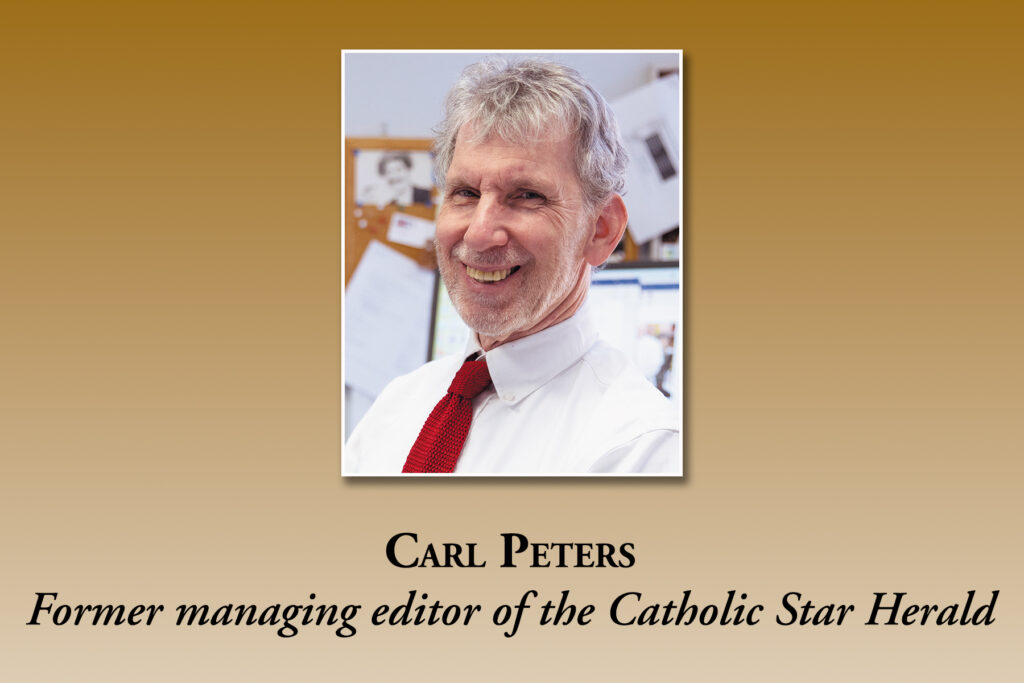
Carl Peters is former managing editor of the Catholic Star Herald.




 at the bottom and then tap “Add to Home Screen”
